Beyond the Cornell Headlines: 5 Conversations for Every Family
What are we teaching our kids now that will guide them when we’re not there?
Subscribe



Beyond the Cornell Headlines: 5 Conversations for Every Family
What are we teaching our kids now that will guide them when we’re not there? In response to the troubling Cornell headlines, Mandy Majors and Merideth discuss five conversations parents can begin long before the teen years, from respecting boundaries and developing Biblical values around sexuality to speaking up, navigating drugs and alcohol, and living with integrity online. With practical examples and faith-centered encouragement, they help parents build a trusting relationship where kids know they can ask for help, even after making a mistake.
YouTube
Sources & References



Free Guides
Additional Podcasts


Transcript
The Question Behind Every Rule
SPEAKER_02 0:00
What am I teaching my child in my home that I hope will carry over to when I’m not there?
SPEAKER_01 0:07
I just don’t really think that our generation understands the normalization of extreme pornography. Kids are gonna make mistakes. Adults are gonna make mistakes. We all are going to make mistakes. But you’ve got to be able to recognize and teach them that even if the mistake has been made, I’m still here for you.
SPEAKER_02 0:26
How you model boundaries in your home, all of that plays into how your kids view consent, whether you’re using that word or
Responding To Tragedy Without Speculation
SPEAKER_02 0:36
not. Welcome to the Next Talk Parent podcast. I’m your host, Mandy Majors. Together, as parents, we’re learning how to navigate tech, culture, and faith with our kids. We share real stories and real hope as we fight to keep our kids safe in a digital world. We have all watched the horrific Cornell headlines. And today I really wanted to unpack that with our operations manager, Meredith Zingleman. She’s joins me again. Meredith, introduce yourself for those who do not know who you are.
SPEAKER_01 1:10
I’m Meredith Zingelman. I’m the operations manager at Next Talk. I’m a registered nurse. I have three amazing kids, a husband, been married 30 years. I have to always, it’s like, wow, 30 years. It sounds like dates myself. Significantly dates myself. But I appreciate you asking me to pour into this. Um, it’s discussions you and I have already had and talked about some of the things we’ve seen and heard. And um I think it’s important um, based on everything we’ve seen, to address it in our homes, learn and develop some strategies as we’re raising kids so that we’re not so blindsided and horrified at the way the culture is pointing and the way the culture looks, I guess is the right way to say. It’s a difficult conversation to talk about, even though we’re not going into any of the ins and outs of the report and all that kind of stuff. It’s just hard to have conversations about stuff like this. It’s hard to have them at home. So when you told me that you felt um like we could come up with a great show for parents, I was, it actually gives it some purpose in the conversations, you know, to help parents um prepare for a time when our kids are not with us anymore.
SPEAKER_02 2:26
Yeah. Yeah. One of the things we we a hundred percent do not want to do here today is talk about this situation, the specifics. These are real people that are getting real death threats now, and we don’t know the evidence. We weren’t there, we aren’t privy to the investigation. And honestly, this whole mob mentality on social media, and we’re trying people in the public square, is so unhealthy. It needs to be evidence in a court of law, and people decide what happened. But now with social media and everybody digging through what’s available to the public and then leaking it and putting it on social media for likes and getting monetized from it. I mean, it’s just so much. And so, what we want to do here is we want to honor the alleged victim, the alleged perpetrators, all of their privacy. And we’re not gonna dive into that. The purpose of this show, though, is the culture of how this could have happened and how it could have been prevented. All of those conversations are like years in the making in your home, right? It’s not just like a one and done when they start dating and you have the consent talk. I mean, this is way beyond what we need to be doing in our homes to make sure this doesn’t happen again. For sure. And that’s kind of what we wanted to dive in today. And we’ve identified five conversations that you need to have with your littles to hopefully the goal is to prevent a crisis like this from happening again. Like that’s our goal at Next Talk. So, first of all, I want to start with if you have an older child or a kid at college right now, I think just the first question is what do you know about this and what do you think about it? And just start there, listen, and then go from there on in the conversation. That’s really also not what this show is about. Again, we want to talk about five specific things that you need to be talking about through many, many years of conversations with your kids at different ages and stages. So that I think that’s kind of how we want to set up the show before we get into these five conversations.
SPEAKER_01 4:42
Well, and I think it’s important to realize once again, if your kid has a phone and they have access to social media, yeah, they’ve heard about this. I don’t even know if this has been in the nightly news. I have no idea because I’ve only seen it on Instagram, TikTok, X, everywhere. It’s also important to know that based on their algorithm and based on their followers and based on their influencer that they may follow if they’re older and they have social media, that they already have the information, what they think is a full picture of information and an opinion. So it’s so important to listen to them and hear what they’ve seen and heard and kind of understand their knowledge based on it all before you, based on your knowledge base, let in. So, but definitely if you have older kids in their own phones or in college, you’ve got to open the door and have a conversation. What have you heard? What do you think? Yeah, that kind of thing.
SPEAKER_02 5:33
Well, and social media kind of is news now. I mean, that’s where most people get their news from, even if it is on the national news, it’s like taking snippets of that and putting it on social. And that’s what’s driving the algorithm. What’s also so crazy is like the way our news cycle runs now. It’s like, you know, this evidence makes this side look bad. And then four days later, this evidence makes it. And it’s just a continual back and forth of, oh, we don’t have the big picture. So I think it’s very wise to tell our kids to just stop with the judgment or picking a side or trying to figure out what happened because we really do need to let um the judicial process take its course here and and have all the evidence come out.
SPEAKER_01 6:17
For sure. You can agree that it’s horrific, all of it. Yes. Without nitpicking and picking a side or or whatever.
SPEAKER_02 6:26
Yeah. For sure, for sure. Uh, and and I just want to reiterate, these are real people who are getting death threats. It’s just a horrific situation for these young people to have to be living their lives in this public, very public way right now.
Consent Starts With Everyday Boundaries
SPEAKER_02 6:40
So I want to get into these conversations that you’re gonna have through the years. And the hope with these conversations is that I mean, we would just prevent a situation like this from ever happening again. Like that is the goal. So, number one, consent talk starts long before any sex talks. I know sometimes we think, oh, we don’t need to talk about consent until our kids are dating or whatever. Not true. Conversations about consent, you may not even use that word, but how you model boundaries in your home, how you respect people’s no or their stop, all of that plays into how your kids view consent, whether you’re using that word or not.
SPEAKER_01 7:28
One way that you can um even get consent with your kids is about posting on social media. Like ask them before you post something. And that’s a very practical current type of consent that you can implement. Hey, I took this picture of you. Are you okay with me posting it? And them saying yes or no. And then if they say no, it’s not that big a deal. You just say okay. And so I think it’s super important to not only look at whether you’re granting consent, but also how you respond when consent is given or not given. I love that.
SPEAKER_02 7:59
And it even starts younger than that, I think, you know, tickling in rough housing or something, and a kid is screaming, stop, everyone should stop. We should never go through that stop or go through that that no, just for the fun of it. Because we’re teaching kids something about consent when we do that. These little moments really do actually matter. You know, years ago, I remember with my son, and he was very young, probably elementary school, and we were at HEB shopping, which is a Texas grocery store, and he he saw a woman and his eyes got really big. She had some see-through things on, and you could see the color of her bra, see the color of her underwear. There, you know, there was just lots of things being shown. Everybody’s had that moment, right?
SPEAKER_01 8:54
Where your kid like looks at something and you’re I’m like, yeah, you know, I wanted to be like, don’t speak, but I didn’t want her, and I I just said, Well, we’ll talk about it in the car. I think a mom, I overheard a mom one time saying, I thought this was so good. She would just say, Eyes on me. And it was a key to her parents, I mean, to her children, to say, look at me, don’t respond, don’t react. Yes. So she could pour into it later, but she couldn’t pour into it at the time. Yes.
SPEAKER_02 9:21
Yeah. I remember that day we were checking out and we were walking to the car, and I thought, I’m gonna have to have a conversation here. And in my brain, I mean, this is the first little boy I’ve raised. And my immediate thought went to, I want him to know that no matter what she’s wearing or not wearing, like that doesn’t matter. His responsibility is his responsibility. Like how he reacts to it is is on him and nothing to do with her. And so I had a conversation with him in the car, right there in the HEB parking lot. And I said, hey, buddy, people, girls and boys, they’re gonna wear all kinds of things. And you know what your responsibility is? How you respond. And guess what? Just because they’re wearing something that we find uh, or maybe they’re not wearing anything at all, it never gives us the right to stare, take a picture, touch, make fun of, or disrespect that other person. Never. And he was like, uh-huh, uh-huh. You know, I didn’t use the word consent. I didn’t talk about some big sexual situation, I didn’t shame her. I just wanted my son to understand you have a responsibility that you don’t get permission to do anything inappropriate because of somebody else’s actions. You just don’t. And that was super important for me to teach through the years. Now, that was when he was little. Of course, as he’s gotten older, we’ve had way more detailed conversations. But but that’s what we’re talking about here. These are conversations that you have years and years and years, and they evolve and get more detailed within time as they get exposed to more things. But but we have to create the ongoing dialogue. It’s never a one and done when it comes to these big issues.
SPEAKER_01 11:22
Well, and as parents, you can think about ways that you can model that just in daily activity. When somebody tells you no, it’s not a big deal. It’s not, I mean, such and such couldn’t come to dinner. Somebody doesn’t want to hang out, somebody said no to me at work. Some you can model those discussions at the family dinner table, like this happened today. It’s not that big a deal. I’m gonna assume the best out of them. I’m going to um, I’m gonna realize maybe they have something else going on, but you’re not bullying, you’re not making fun of, you’re not um making them feel guilty for saying no. Making people feel guilty or continuing to ask in pressure. I’ll change their mind. If you realize how just in your normal conversations, you’re validating either consent or not treating people with dignity. And so I think it’s it’s important for us to model it in our normal daily conversations, as well as when you run into someone um in the grocery store like you did.
SPEAKER_02 12:17
Yeah. As we’re talking about this and thinking about consent, another thing that just pops into my mind practically is talking to our kids about almost like safety. And I would do this with my girl and my boy about um situations to try and avoid so that you weren’t in a in a situation where it could be a he said, she said type of environment, where you’re like being you’re alleging something or you’re being accused of something. And so one of the things that we’ve always talked about is just trying not to be alone with somebody that you don’t really know. You know, like um, I remember when my kids started dating, it was like, hey, we don’t know this family. Like you just have to meet in public first or you have to go on a group date. And then once we know this person and we know their family a little bit, then you can, you know, pick this girl up or or this boy can pick you up and that kind of thing. But it was just like an almost like a safety conversation before the even the consent would even get there. But I do think this is part of it. And it’s just a practical thing that we can do.
SPEAKER_01 13:28
Well, and I think it’s important conversations of friends that you you have that are in your inner circle or people you’ve poured into that know you, that want the best of you, that are um, that have poured into your life and you’ve poured into theirs, versus new friends um and acquaintances. And again, our kids are growing up in a world where they think they know people intimately if they know them on the phones.
SPEAKER_02 13:51
Well, they’ve just been DMing for a while, soliciting lists. I’m gonna go pick her up. Or he’s gonna come pick me up. And I’m like, whoa, whoa, whoa.
SPEAKER_01 13:58
Even in the online dating world that is so prevalent nowadays, yeah, everyone suggests that everyone meets in public first. Yeah. And um, and and so I think it’s it’s a good conversation to always have as a parent. Where are you going and who are you going with? Are always conversations you should have. Which friend are you looking out for tonight? Who’s looking out for you? Where’s the partners? It’s unfortunate that we have to continually discuss with our daughters being with other people, but you do. You what other of your friends are going? Yeah. Who are the other girls going? Who are the other boys going? As parents, you you’ve got to get to know their circle. And um for girls and boys. For girls and boys, yes.
SPEAKER_02 14:39
So, number one is the consent talk starts long before any sex talks. And we’ve talked about different ways through the years that you could model this in your
Building Sexual Ethics In A Porn Culture
SPEAKER_02 14:48
home. And we also added in that practical safety stuff about who they’re gonna be with and and that sort of thing, put putting some boundaries around that. Um, number two, conversation that I think is really, really important. To me, this goes, I mean, consent is everybody should be teaching consent. It’s like a no-brainer, right? Number two, help your child develop a moral compass around sexuality. Help your child develop a moral compass around sexuality. Man, what what I mean here is just like pornography. We live in a world where pornography, these kids are saturated with it. Like, like parents, we do not understand what it has done to their brain, how they see people, how they view sex, because they’ve they’ve been exposed to so much porn at such young ages. I think we’re gonna be studying this for decades and decades to come. And because of it, we’re seeing, I mean, we’ve even seen more sexual abuse cases, um, a lot of boy on boy sexual abuse with pornography. And so we’re seeing this just increase. And we are not seeing people as people anymore. We’re seeing them as objects. Their thought process is like me, like gratifying to me. What’s what’s good for me? And there’s no thought about the partner or or the other person’s satisfaction or anything because of what porn has done to our culture. Does that make sense?
SPEAKER_01 16:23
I mean, and I think this just ties into it so much. Well, it’s the first place my mind went when I first saw the news on this, and the shock and awe of this. How could this happen? And what was they thinking? And and and I mean, again, we don’t know. But the my first thought went to this is a generation of kids who had pornography in their pockets because just the ability for it to be in an app on your phone is so accessible and lets in the blurred lines and the confusion about consent in maybe some of those exact same environments. And and you’ve talked about in your presentation how pornography’s always been around, but how it’s shifted because of technology and how different it is in the objectification objectification and the way women are portrayed and the way men are portrayed in it, and the groups and the I mean, I just don’t really think that our generation understands the normalization of extreme pornography. And it grieves me, but it’s the first place that my mind went when I saw this. I thought, I wonder what role that played in guardrails being being gone and and the pause and the weight and the um depravity, really, I guess, of it all in um in the sense that it’s become so normalized. Kids are desensitized. Yeah.
SPEAKER_02 18:00
They’re desensitized. Yeah. And we see this all the time when we help a family with sexual abuse or whatever, is that you can see a pattern and trace it back to this pornography playing a role and desensitizing, and then it it’s almost like a drug. Then it’s like I’ve watched it so much. Now I need a human to do this to what I’m seeing online. And there’s just a whole conversation here about the role I think pornography has played. And even bigger than pornography, like, what do kids feel about sex? You know, sex is so cheapened in our world because of the effect of pornography on our culture. And it really is so um selfish, self-centered. And, you know, one of the things as Christian parents, we try to talk about, you know, we have this principle called develop moral compass and default to love. And under this principle, we talk about sex a lot in how to have these conversations in our home. Because, you know, for me as a Christian mom, like I believe the goal is to save sex for marriage between a man and a woman. And when you do that, it becomes less about you and what you’re getting out of it and more about serving each other. And so it truly is countercultural to how pornography has made sex about all about yourself and all about a selfish thing. You know, when you’re more worried about serving your partner in this space, you are very much more going to be more likely to um be kind and respect the boundaries within that um sexual context.
SPEAKER_01 19:54
Well, and I think it’s good to, even if you’re not wanting to have a sexual um moral code per se when your kids are little, like you don’t want to talk about it from a sexual aspect. You can still start family moral codes of respecting people, don’t make fun of people’s bodies, kind of what you’re referring to before. Like in our family, we tell the truth. In our family, we treat people with dignity. Like it’s okay to come up with some catchphrases that are your family’s catchphrases that are kind of the very bottom level of what you’re gonna build on as they get older. Like we’re gonna treat all people with dignity. We’re not gonna make fun of that person. Super simple, right? In in all aspects. This is kind of a sidebar, but I used to really struggle with some of the TV shows that the kids would watch. Um, but it’s a good place to put it in because they would make fun of older people or they would make fun of parents continuously in these TV shows. They were rated G TV shows, but I would turn them off and say, I don’t like this because they’re not treating their dad with dignity. They’re not treating their mom as though she’s given her life to take care of her kids. And my kids still joke now about how mom would that, I mean, those types of shows would really frustrate me because they were demoralizing humans. And it’s it’s not talking about sexuality, but it’s building the framework for treating other people with dignity and seeing them as more.
SPEAKER_02 21:22
And that’s where it starts when they’re when they’re little before you get to the sex stuff. And obviously, you know, once you move into the sex conversations, I say this from a Christian mom perspective, but I also want to say, I know there’s many of you watching this podcast that may not hold my same beliefs around sex. And what I would say to that is I mean, obviously that’s that’s your family, your choice, but but what I would say is what are what kind of boundaries are you putting around sex for your kids? So if it’s like a safe, trusted relationship. Can that relationship be three days? Does it need to be three weeks? Are you okay with threesomes? Are you not okay with like these are conversations that kids need to hear from their parents? And so when I do talk about developing a moral code around sexual ethics, whether you’re a Christian or not, kids really need to understand what your true belief is on this subject because they are being subjected to lots of pornography and lots of different views on this subject.
SPEAKER_01 22:30
For sure. If they don’t hear it at home, what’s your family moral compass is, they’re gonna fill in the blanks.
SPEAKER_02 22:37
Number one, the consent talk starts long before any sex talks. Number two, you have to develop a moral compass around sexuality.
Raising Kids Who Refuse To Bystand
SPEAKER_02 22:48
And three is, man, and you already kind of mentioned this, Meredith. Three is don’t be a bystander.
SPEAKER_01 22:55
Yeah, that’s a big one for me. I mean, I’m a registered nurse, so I’ve uh laid the groundwork for that my whole life. Um, I think, I think with kids, a lot of titletaling and um, you know, don’t be the one that calls it all out. I think we hear a lot of that type of conversation, but I feel like the brave, strong kids that that are really movers and shakers in the world are the ones that are gonna stand up for their friends and speak truth into situations. I think it’s super important in um in this don’t be a bystander to look at different perspectives. You know, I think young men specifically may not understand the perspective of a female in um when someone needs to stand up for them or when they need validation. You know, I have a son and two daughters, and so I’ve witnessed both situations and I’ve asked my son before, like, hey, when you’re um going to the grocery store at night, do you ever feel afraid? Um, you know, when you take an Uber, do you ever get a little uneasy? And and I think it’s great questions to ask um young men so that they can understand the perspective that women may be looking at things at. And then maybe it’ll help them step up and realize that they don’t want to be a bystander in that conversation. They want to speak up for women and and change that culture of thinking.
SPEAKER_02 24:26
Yeah, and and I want to stay here when we say don’t be a bystander, it this is exactly what it means. Like you’re gonna stand up when there’s something happening and you’re gonna intervene and help someone. Like basically be a good Samaritan, right? Step up and do the right thing because it’s the right thing. I honestly think, Meredith, we live in a culture that have made fun of Karens online. Any mom out there that like puts her foot down and been like, and has been like, why is there porn in school? Why do we have books with pornography in school? Like, what we’re called Karen’s. And so our kids have witnessed that through the years, and they’re like, Well, I don’t want to be branded as a Karen. Uh, they have snitches get stitches. That’s a whole phrase.
SPEAKER_01 25:12
Every single crisis that we see happen live and in person on TV is on a video, and nobody’s getting help or standing up for the person necessarily. They’re just recording it. Yeah. And it’s it’s scary.
SPEAKER_02 25:24
I mean, culture is telling us mind your own business, shut up, do your own thing, right? And then um, because you’re gonna get made fun of, you’re gonna be called these names, you’re gonna be labeled. And I we have to teach our kids to go against culture once again, to stand up and do the right thing when it’s the right thing. You know, I’ve always said to my kids too, and we’ve kind of talked about this as a family, is what if you’re witnessing something and you don’t stand up and something really bad happens? Like you have to live with that for the rest of your life. And there have been situations throughout the years where kids were, you know, suicidal or or hurting themselves or whatever. And, you know, my kids and I would be like, we we have to tell somebody here to make sure this person’s getting help. There’s always a way to do the right thing. Yeah, really is. Yes, we can’t just say, okay, we’ll we’ll pray for them. I mean, of course we prayed for them too, but it was like the reporting had to be there as well.
SPEAKER_01 26:23
Right.
SPEAKER_02 26:24
We had to stand up and do the right thing. I think also in within this conversation, obviously, is it for anyone out partying, if you see somebody else that is not um in the right state of mind because of drugs or alcohol or whatever, you have an obligation to make sure they’re okay. You know, call them an Uber or get them a cab, go check on them, if especially if you see somebody trying to take advantage of them.
SPEAKER_01 26:51
For sure. And and I think it’s in I think it’s important to say from a Christian perspective, godly men take care of women and children. They protect them. Um and so I think speaking that over your young sons and teaching that, oh, whoa, whoa, you know, hey, we help mom with the groceries. We we help take care and protect women and children. That’s who we are. And the Bible models that for us over and over. Uh, 1 Corinthians 16, 13 through 14. Be watchful, stand firm in the faith, act like men, be strong, let all that you do be done in love. That covers both strong and love all in one. And that’s the English standard version. And it takes the whole picture of what men were raised to be, not by standards, but to speak into the culture and the protection in a loving manner, not in a authoritarian manner, but it clearly says, let all that you do be done in love.
SPEAKER_02 27:53
I think this goes back to what you were saying earlier, is that like part of your family values, when we were talking about the sexual ethics, and you said this even goes before we get to the sex talk, you were saying the the this is how what we do in our family. This is it right here. You’re teaching your young sons when they’re when they’re very young to help with little things and be protectors of their sisters, protectors of other girls in their in the room.
SPEAKER_01 28:21
Yeah. Uh respect boundaries, speak up when your friends need something. We used to say a good friend helps their other friend tell the truth. A good friend helps their friend obey their parents. Like you have to say what the goal is to be a good friend. So a good friend helps take care of their female friends and their male friends when they’re all out at night. Like if you see something going on, hey, let’s leave.
SPEAKER_02 28:46
Nobody leave your friends who are not doing well. Like, don’t do that. How many times have we said that to our kids?
SPEAKER_01 28:54
The buddy system, the buddy system. Well, and I think one thing that’s good is I mean, it sounds kind of silly, but to simulate these discussions, like say, hey, if you’re at a party and you see this, don’t just say do something, give them examples of what do something looks like. What a practical way to help them could be.
SPEAKER_02 29:12
Practical way out. Yeah. I think the number one thing too is you can always call me in the middle of the night. I don’t care if you’re the one that’s struggling. Uh, you know, I’m I’m it. I mean, I’m here for you. I love you. You don’t have to carry this alone. If you find yourself in a situation where you’re like, what in the world is happening right now? This is not right, and I don’t know what to do. Text me, call me.
Alcohol Drugs And Protecting Vulnerable Friends
SPEAKER_02 29:37
We’re here. Okay, number four, talk honestly about drugs, alcohol, and vulnerability. And we’ve honestly almost already covered this. And we have so many shows too on alcohol. I will link some of them. But um, you know, two just conversations with your kids about alcohol, how it affects them. You know, obviously, for me, I as a Christian mom, I was like, hey, I really don’t want you drinking till you’re 21. It’s illegal. You shouldn’t be breaking the law. But I also want you to be educated if you and your friends make this choice, because they’re old enough to sneak it. I don’t want that for them. We talked a lot about addiction in in our home because my family has addiction in our in our family line. So we talked a lot about that. But but I do think um you don’t leave people alone with your drinks. You watch people making sure they don’t put something in your drinks. Like all of these things need you need to be aware of. Now, if somebody drugs you, it’s not your fault. We never blame the victim. Never blame the victim because of something the victim did or said, you know.
SPEAKER_01 30:52
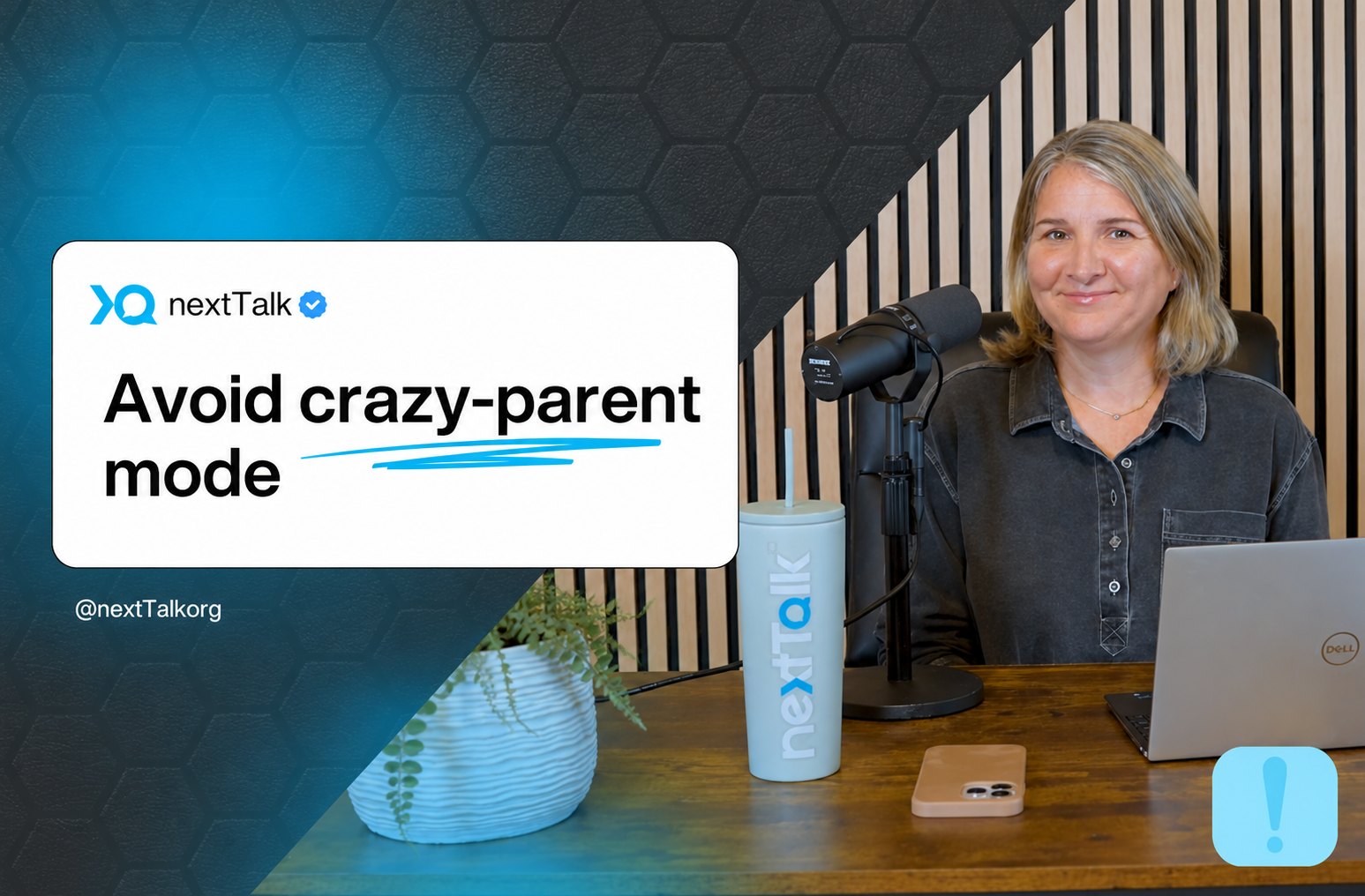
Well, and I think it’s so important to say, say and model, no matter what, you gotta get me some help. If you break a family rule, like you said, you didn’t want your kids drinking before 21. It’s illegal. That doesn’t mean that you expect them to take care of the problems or the the mess ups without your help. And if your modeling come to me at 2 p.m., then your modeling come to me at 2 a.m. And so at your house, are you building a where they can come to you and they’re processing things with you and you can be that phone call and will be. But kids are gonna make mistakes, adults are gonna make mistakes. We all are going to make mistakes. But you’ve got to be able to recognize and teach them that even if the mistake has been made, I’m still here for you. So when your kids are little and they come to you with something, a mistake that they’ve made that’s little, you you’ve got to welcome them in with a loving, open, forgiving arms and not blow it up so much that they don’t continue coming to you. That’s kind of really what you mean when you’re talking about don’t go crazy parent mode. Because I mean, your kid calls you at 2 a.m. You want to go go crazy parent mode. But what you’ve got to do is help them keep people safe, help their friends and address whatever else is going on at another time.
SPEAKER_02 32:08
Correct. Yeah, correct. And that that’s where you go into the 2 p.m. is the little things throughout all the years. Right. Where they are making mistakes and you’re you’re showing them unconditional love.
SPEAKER_01 32:18
And again, being a victim of something, if you’re somewhere where you don’t belong, does not make you less of a victim. Correct. You’re still the victim. Someone else still has harmed you. Yeah. And you see, so many times kids won’t involve parents or they won’t tell someone because they weren’t where they were supposed to be in the first place, or because they had lied, or because, and and it’s just, it’s just not factual. Parents want to help regardless of what’s gone into that situation.
SPEAKER_02 32:48
Yeah, I think it was Brian Montgomery or somebody on our podcast who said shame um loves the darkness. And once you like have gone somewhere that you weren’t supposed to go, like that’s a lot, one lie to your parents. So then something else happens and it just continues to get darker and darker and darker because you’re in a pit then. And so always try to have that open and honest conversation with your kids. I always talk about this just from an online perspective. Man, if they have created a secret account behind your back, they’re more vulnerable to being groomed. And so we just don’t want that. We want them to be able to talk to us and be open with us, even when we don’t like it. Yeah.
SPEAKER_01 33:33
And they don’t have to figure it all out before they ask for help. It’s not like they have to give a presentation of everything that’s happening. Just teach your kids right now. Mom’s here to help, dad’s here to help. We’re here to help you solve the world’s problems in your head or in your experiences.
SPEAKER_02 33:49
Yeah.
Your Phone Is Not Your Diary
SPEAKER_02 33:50
So these first four major, major conversations that you’re going to have through the years, this fifth one, it’s minor, but man, I have been really thinking about it since all of this broke. Gosh, over a decade ago, in my book, I wrote, teach your kids that your phone is not their diary. And I would always tell my kids through the years, don’t ever put anything on your phone that you don’t want your parent, pastor, or principal to see. That’s what I would say to them. Because I said, in the event of an investigation, they’re going to be able to get whatever you deleted. They’re going to be able to get into that phone and find out what you have deleted. And so I would say to my kids, who you are in person, your integrity has to be the same as who you are on that phone. You have to be the same person with the same kind of integrity and morals. And man, when all of this stuff kept came coming up, you know, it was done on Snapchat, which that was just horrific to read. But again, kids think Snapchat, it disappears and it’s like nobody’s ever going to see it. That’s what they think. And the other thing I thought of too, simultaneously with this Cornell story has been this Caleb Blyn story. I don’t know if you guys have watched this, but he was an American Idol guy and he had an affair on his wife. And now he’s been found guilty in a court of law of murdering his wife. And he and his mistress thought they were deleting all of their text, but in court, they read over 100,000 of them. Like there were over 100,000 recovered. So it’s the same situation of we think what we put on this phone is private. And I think a lot of times we become somebody we shouldn’t be on our phone because our guard is down and we don’t live with integrity like we do in real life. And you just have to instill this in your kids. Like who they are on their phone better represent who you are in real life.
SPEAKER_01 35:53
Well, in a group chat is a choice. Oh. It’s it’s a choice how you respond. It’s a choice that you’re in it. If somebody puts something in it and you don’t do anything about what has been shared, you’re a bystander. You saw it. You’re now we got to go back to the other principle of not just standing by, letting things happen. I mean, and and as parents, you’ve got to have discussions, not like don’t get in a group chat, but an ex a discussion of, hey, if something like this showed up in your group chat or I heard about da-da-da-da. What kind of group chats are you in? Could your grandma be in it with you? You know, could could mom, could your little sister? And so I think I think you have to take these things that they have on their screens and put them in real life for them. Yeah. Because just like so many discussions we’ve had since I’ve been sitting in this chair a few times, there’s a person behind the screen. They’re real people that you’re talking about that you’re making fun of. And people aren’t here at the cost of your humor or your indulgence or your whatever. They’re real humans that have people that love them and they need to be treated with dignity.
SPEAKER_02 37:07
I think too, when you mentioned group chat, how you model that throughout the years is going to very much impact this because we we’ve all seen stuff go down in group chats with our kids that we need to handle and have conversations about and report things sometimes. And so that, I mean, again, we’re modeling all of these five conversations for years and years and years in our home to create an integrity, a life of integrity, so that when something is going bad, somebody’s gonna step up.
SPEAKER_01 37:39
Well, and I can remember having discussions with my kids when they were very little, and they would first, I shouldn’t say very little, when they were in middle school, little young phone users, and they would be in group chats and something would seem inappropriate, and they would tell me about it. And we would discuss how or who, what other kids might be sharing that with their parents. And it was a great example to show them like it’s not just staying in the group chat. Like that might actually not even be that kid. That might be their parent who’s entered the group chat in middle school because they their child doesn’t have a phone. So you really need to have discussions all the way up through that that number may or may not actually be that kiddo. So you have to actually realize like, if I’m gonna partake in things that I shouldn’t in a group chat, who actually is it on the other side seeing it? And and I mean, goodness, over the years of Next Talk, there have been a lot of group chat discoveries and group chat worries. And and it’s, I mean, and here it is right now in national news in one of the worst ways. And it’s stuff that you’ve seen where that’s little, they’re little and it just gets away because people don’t realize it’s human beings you’re talking about.
Five Questions To Test Readiness
SPEAKER_02 38:49
Ultimately, all five conversations come back to one question. What am I teaching my child in my home that I hope will carry over to when I’m not there and how they react in those situations? Will my child respect another person’s no? Will my child have a strong sexual ethic? Will my child step in when they see someone needing help? Will my child know how to handle and respond to drugs and alcohol? And will my child have integrity on their phone because they know nothing is truly ever private? This situation at Carnell is horrendous and we are praying for everyone involved. But what we hope from this show is that parents of littles, kids of all ages, will start to have conversations today that will lay the foundation on some of these major big discussions so that we can hopefully prevent a situation like Cornell from happening again.
Support Next Talk And Closing
SPEAKER_00 40:00
Next Talk is a 501c3 nonprofit. Everything we do to serve families is supported by people like you. Make a donation today at next talk.org. Next talk resources are not intended to replace the advice of a trained healthcare or legal professional, or to diagnose, treat, or otherwise render expert advice regarding any type of medical, psychological, legal, financial, or other problem. You are advised to consult a qualified expert for your personal treatment plan.
This podcast is not intended to replace the advice of a trained healthcare or legal professional, or to diagnose, treat, or otherwise render expert advice regarding any type of medical, psychological, or legal problem. Listeners are advised to consult a qualified expert for treatment.