
From an actress in War Room to the author of a new teen girl devotional, this heartfelt conversation is a gentle masterclass in presence over platitudes. We get practical about what to do if your child is struggling with their faith, how open hands can quiet rebellion, and why modeling Scripture at home matters more than quoting it.
From an actress in War Room to the author of a new teen girl devotional, this heartfelt conversation is a gentle masterclass in presence over platitudes. We get practical about what to do if your child is struggling with their faith, how open hands can quiet rebellion, and why modeling Scripture at home matters more than quoting it.






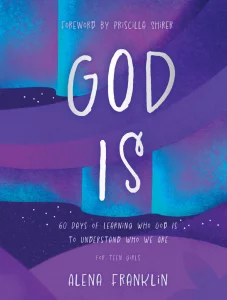
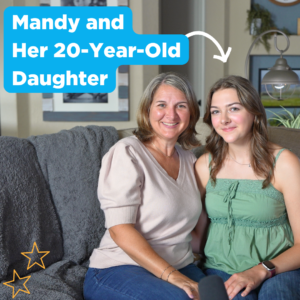




Alena Franklin is an actress, vocalist and author of “God Is.” Alena’s professional acting debut was “War Room,” a box office hit in 2015. Shortly after, Alena co-authored a three-book fictional series titled, “Lena in the Spotlight,” with her mother, Wynter Pitts, founder of For Girls Like You Ministries. Though having experienced success, Alena’s journey has not come without loss. She tragically and unexpectedly lost her mother on July 24, 2018. Though the pain left her and her family heartbroken, Alena is not without hope and has used her grief journey as an opportunity to share the hope found in Jesus Christ.
Transcription is done by an AI software. While technology is an incredible tool to automate this process, there will be misspellings and typos that might accompany it. Please keep that in mind as you work through it.
SPEAKER_01:
Welcome to the Next Talk Podcast. We are a nonprofit passionate about keeping kids safe online. We’re learning together how to navigate tech, culture, and faith with our kids. Today, we have an absolute treat for you. A very special guest joining us, Alina Pitts Franklin. You might remember her from her breakout acting debut as a young girl in the box office hit War Room, where she starred alongside her aunt, the incredible Priscilla Shire. Alina comes from a remarkable family of faith leaders and ministers. Her Aunt Priscilla, Dr. Tony Evans, Crystal Evans Hurst, and her late mother, Winter Pitts, the beloved author and founder of For Girls Like You Ministries. In 2018, as she was heading into the ninth grade, Alina faced unimaginable loss when her mother passed away unexpectedly. If you caught our recent episode with Alina’s dad, Jonathan Pitts, you’ll know this family has walked through deep grief with incredible grace and faith. Now, Alina is sharing her own story in a powerful new way. Her brand new teen devotional, God is. She opens up about what and who has truly sustained her through it all. Alina, thank you so much for being here. Thank you for having me. It’s a pleasure to be here. I want you to introduce yourself to people who may not know who you are. You also just had a last name change. So tell tell us a little bit about yourself.
SPEAKER_02:
Ooh, this is such a hard question. Um my name is Alina. My name is Alina Franklin now, formerly Alina Pitts. I’ve just been combining them because I don’t know what else to do. Um, and I grew up in Dallas, Texas. I’m a Texan at heart. Came, um, grew up in like a ministry family. And so luckily or thankfully, I got to witness ministry done in the right way and up close in a really beautiful way. And so I don’t remember a day where I didn’t know and love Jesus. Like my family just made Jesus very attractive. They embodied him really well. I got to watch that and kind of grow up in church. Um, around the age of 10, I got the opportunity to be in a film called War Room, which kind of set off my career um in acting and entertainment, opened up tons of doors um for writing. My mom was an author, and so we wrote together a couple of times. Um, and really I got at the age of 10 and and then on then on out, I got to watch God just do really incredible, mighty things in my life for no other reason than he just decided to, and I was willing to say yes. And so I I think I got a grasp for what God was capable of at a younger age, which I’m so thankful now for now as an adult. Um, at the age of 14, my mom tragically and suddenly passed away. So my my mother, author Winter Pitts, um, died in 2018, and as you could imagine, that completely wrecked our lives as a family. We ended up moving um to Nashville, Tennessee, which is where I currently live now. My dad was taking a pastoral role as we were um in the process, we were in the process of moving when my mom died. And so my dad was taking a pastoral role, decided to still move and take that role. And for the next, I don’t know, four, five, six, seven years, we’ve kind of just been walking through um grief. And then what comes after that? Because lo and behold, there is life after after death. We couldn’t have fathomed it um, you know, a year, two years, three years after my mom died, and now on the other side, I’m now married to an incredible man and have gotten to see God continue to create beauty in my life in spite of my pain. And so a huge part of my story is just the duality of God’s goodness and the hard things of life that happen. And um, recently I got to write a book called God Is that um I was able to kind of just incorporate that lesson that God has been teaching me into that book and really deep dive into his character. And yeah, I think that’s an intro. I don’t think I missed anything.
SPEAKER_01:
That’s a fantastic intro. And I just want to say I got the book right here. Uh, it’s a beautiful book for for teens and young women, but but also like God spoke to me through it. And I just thank you for writing it. I I think the perspective of the book is so powerful knowing what you’ve lived through, right? As a mom myself, I look at you and I think, wow, like that could have really wrecked her life, losing her mom in such a sudden way at a young age. And you also, I think, were the oldest of four girls at the time, right? So you had three sisters, your dad’s now a single dad trying to navigate four girls. You have your mom’s ministry that she had started, you know. I think it’s for girls like you. And so you found yourself in this turmoil. And, you know, now we see the beauty in the book after all those years. But walk me through what that was like, just walking through suffering and and how people came alongside you in a good way or a bad way to help you through that.
SPEAKER_02:
Um, I think walking through suffering in the public eye is a nuanced, it just offers a different um nuance. I am an oldest child, and so I already struggle with a bit of performance and yeah, just wanting to look good and wanting to, you know, show up well. And then my mom dies, and I mean, I don’t know how to do that anymore. And I’m being thrown on stages in the most beautiful way. God is using my story to um share about I guess grief and the fact that he’s still good in the midst of it. But I had just lost my mom, and so I’m up on stages. Speaking of the goodness of God, I have no idea what his goodness actually entails at this point, having considered my mom had just died. And so I was watching God use me, but also I was really wrestling and really struggling privately because I didn’t, I couldn’t reconcile how God would allow my mom to die. Um, but I still loved him, and so really it was it was a big wrestle. I think for four or five years, God and I just kind of really wrestled it out. And that the book, God is, is just the remnants of that wrestle. Like what the the gold and the beauty that came from that, um, which for the most part, it was just a really ugly, a really ugly season. I struggled a lot with anger um with God and then also just with humanity, because I think the church isn’t all the way equipped to walk alongside people in pain. I mean, we’re equipped, like we have the Bible, but we’re not really sure how to do that. And I have tons of empathy for that now, having also walked through hard things with friends. We come to church for the most part and look pretty good. And so when people’s lives are falling apart, we don’t often know how to walk alongside of them. Um, so I had a bit of anger just dealing with the humanity of people in my own sin and my own humanity as well. Um and so yeah, I think I think I could go on and on about the pain and the hardship of losing my mom. But what sticks out the most is actually God’s relentless pursuit of my heart in the midst of, I mean, the ugliest season of my life so far. Um, he just wasn’t, he, he wasn’t moved by by my anger towards him. And he he didn’t run. He stuck around, he kept pursuing me, he kept displaying his goodness in my life, he kept showing up. And I think that’s what I greatest of all, deeper than the pain and all the things, that’s what I look back on in that season. And even now, just like his goodness is all over my life, and he’s continued to show up. Um, and I think that’s why I’m here, and that’s why I’m all right, and that’s why that didn’t completely train wreck my life because God just kept pursuing me. Um, and thankfully I was I was soft enough to eventually, you know, lean in and listen to him.
SPEAKER_01:
I love that so much, Alina. And you it look you speak beautifully. I can’t believe you’re only 21 years old. I feel like you’re a beautiful soul with warrior faith, you know, like truly. And I I think that’s probably seeds planted through your mom, your dad, and in your family in ministry throughout the years. But it’s just beautiful to hear you talk about your journey that way. Um, I do want to talk about like the wrestle. You talked about that a lot. And I think sometimes as parents, you know, we have a lot of parent listeners when we see our kids struggling with their faith or maybe questioning or being angry with God about death or or anything else, like why can’t I live this way? This is the way I want to live, you know, any kind of thing that they may be struggling with. I want you to speak into how did your parents, your, your dad, your family come alongside of you and speak truth into you, but also give you room to feel your own feelings and grieve and not feel shame about those feelings. Because I think sometimes, as Christians, what I have seen in my life is something tragic happens, and we just want to rush and get to the hope that everything’s gonna be better, and we skip the healing that needs to happen of the flesh. And I want parents to hear how your family came alongside of you and helped you do that, helped you do that with the wrestle.
SPEAKER_02:
I love that question because it I get to brag on my dad, who I wish he was sitting beside me. If he was, he would be okay with all of this. But my dad really struggled the first few years of my mom passing, as far as allowing us as his daughters to go through the process of grief, I think. Um he really wanted to rush to the hope part, and we had all just lost our mom. He had just lost his wife, and so that comes with a lot of pain. Um, I’m not sure when it clicked for him, but I do remember watching it click for him where he just realized, like, oh, I can just sit here with my daughter in her pain, and that’s actually a lot more impactful than me trying to just feed her the truth of the gospel over and over and over. Like the gospel speaks for itself. When I sit beside my daughter and love her well and just sit, like presence the way God has just sat with her. Um, that really changed me and impacted me. I was really struggling at one point with like just thoughts of self-harm and and just really evil thoughts. Um, and I remember telling my dad, and I watched him panic. He just panicked and was like, I don’t know what to do. I’m so scared. And then I’m not sure he probably went and prayed. But a few a few moments later, I was in my bedroom, just laying in my bed. Spent a lot of time laying in the bed crying now that I look back. Um, and he just sat on the bed beside me and he just sat there. Eventually he laid down and started crying as well. But I just remember him like sticking around and just sitting there. Um, and so for any parent that’s walking with a child through anything that is not, you know, pleasant or hopeful or exciting or feel good, I think the most powerful thing is presence. Like we feel the need to do more and say more. But I’ve watched God do the most transformation when we just um true like have true friendship with people and sit with them. And so I’m really thankful for my dad doing that. There are plenty of moments I remember him just standing nearby. And I just knew that he was there. I was probably angry with him and didn’t want to talk, but I remember just like being so thankful he was standing outside my door or sitting in the doorway or sitting on my bed. Um, and so yeah, I think presence is more powerful than we think.
SPEAKER_01:
I love that so much. And I, you know, you’re you’re you’re years older now. You have some wisdom under your belt. And I I I hear in your voice grace for your dad. Like he was struggling too. He’s a human. He had just lost his wife. And so he had to process that also. Um, and so I love that there was grace for everybody around, but I that is such a word for parents to like listen more than we talk. Just let your kid feel and be there and and wrap your hands around them. Like, I love how you say presence. And it really does model what God does for us. In your book, as I was reading it, and so she has an awesome um introduction to the book, and then it’s like 60 days of devotional, is how it’s structured. So it’s super easy to read. You can do a little bit at a time, you can read it all at once. It’s just a fantastic read. But I love how you come about this because a lot of times when in our world, everything is about us, right? Like our feelings, our thoughts, our identity. And you kind of flip the script on it because what I saw as I was reading this was a young woman who escaped all of that and ran away alone with Jesus to figure this out. And it was almost like God is all these things, these characteristics, and we’re not gonna know our own self until we know our creator.
SPEAKER_02:
Yeah.
SPEAKER_01:
And I just you did it so beautifully. One of the things that you said was the one that really was a tearjerker for me, God is my home. Can you talk about that one just a little bit, about what you said there? And and because I think so many teens today, whether they’ve suffered the loss or they’re just struggling to figure out who they are, this just resonated with me so much that I feel like this message in God is God is our home can transform how we look at God.
SPEAKER_02:
Yeah, I think personally, when we think about like um how we all have a drive for something, we’re all looking for something. Mine is safety. I want to feel very safe. I want to feel protected, I want to know that there’s a safe place for me to land at all times. I’m always looking for how to exit a situation, enter a situation, and like find the safest place. Um, and God has called me to kind of a nomadic life. Like my husband and I kind of travel full-time for the most part. We’re called to different states all the time, different countries. It’s very exciting, but also I found myself being very afraid. Like, where do I go if something goes wrong? Or yeah, where do I hide? And um, I just remember there was a season of life that God called me to that was very hard. I was living somewhere, it was very scary and very hard. Um and he didn’t just call me to be bold, he like, he like offered me comfort and home in him. And it just clicked like, oh, I’m actually good wherever I go. Like I’ve got God’s angels surrounding me, but better than that, I have him in my heart and he’s actually protecting me. He’s actually watching over me, he’s actually looking after me. And so, yeah, that’s where that revelation came from. And I think from that, like when we, especially for women, when we can see God as safe, I think the door of like vulnerability and and openness that we desire to have with him, intimacy that we want to have with him grows because we know that he’s got our our best interest in mind. Um, and so yeah, I think that is one of the more foundational characters of God that I think we would all do really well to fully understand. If we really believe that he’s our home and really believe that he’s safe, we would offer him a lot more space in our lives.
SPEAKER_01:
Well, I think too, a lot of times people can’t fully trust God because they don’t know him. One of the things you said early on was that your family did a really good job through the, I mean, you come from a powerhouse ministry family, right? You’ve seen it. And they did a really good job of portraying Jesus with a good character. And how much do you think that helped you as you started to struggle and be angry with God and question him? How much do you think that helped bring stability into your life and see it from the biblical lens instead of your flesh lens of grief and anger and sorrow that you were walking through?
SPEAKER_02:
I think it made a world of a difference. Even when I look back and think about, we were a very scripture-heavy family. We read a lot of scripture, we did a lot of Bible memorizing Bible verses and really like life skills that I appreciate, but I think lots of people do that, and lots of people stray from God. I think the difference was that these scriptures we were reading, my family was actually living out. And so my whole life, there was never like confusion on who Jesus actually was. I was like, I’m reading that Jesus is this, and you’re showing me that Jesus is this. And that those two things being the same, um, I think was actually very helpful. I love that you said that because it makes me just so grateful. Like, yeah, I think I’ve always had a beautiful depiction of the true God that like they that that is talked about in the Bible. And so I think that made a world of a difference, absolutely, and speaks to the importance of understanding who God is. Um, because I just, yeah, when we actually know who he is, and thankfully I got the opportunity to know him at an early age and know who he actually is. But I think it made a world of a difference.
SPEAKER_01:
I think that is key for every parent listening to hear. If we are feeding our kids scripture and we’re not living out Jesus characteristics at home, we can do more damage, quite frankly. It is so important to be the genuine Jesus follower behind closed doors than what we post on Facebook or what our neighbors see or whatever. And so I think that is such a word for us for our accountability. So you have this foundation of Christianity, and you have that in your life, and your parents and your family, they are living it out. They are true soldiers for Jesus, right? Not perfect, but learning every day, growing in the word, sanctification, um, getting getting better ever every moment and growing in their walk in with Jesus. When you started to struggle after, how did you communicate that to them? Or did you, or was it just something that you and your um that you worked out with God on on your own?
SPEAKER_02:
Um, I think it was obvious just because everybody was struggling. It was such an ugly, just hard season. I laughed. There’s a story where my dad, um, it was our first night in our new house without my mom, and my dad had to make dinner, and I mean burnt the whole chicken, and and it just was a depiction of the season that we were in. He just starts crying. We’re hungry, we’re trying to comfort him. It’s okay, dad. He orders a pizza. But it was just kind of a hot mess season, and so I think everybody’s mess was just on display. We live in the same house. Um, I think as far as honesty, my dad has always been very curious about how I’m doing. Um, and so I think he could he could always tell when something was off. And He just would gently ask if I was okay. And usually, honestly, I would be like, I’m fine. And I would know that he knew I wasn’t fine. But um, being vulnerable and honest was very difficult in that harder season. Um, and I don’t even think that that hindered any growth. I think my dad just was praying for me. My mom spent years and years praying for me, and I think that that was their piece, that even if I couldn’t completely share what was going on or I was feeling whatever, or I was just kind of um stonewalling them, they were praying for me and and they were they trusted that God cared about me more and that God knew what was going on. And so I think I I benefited from that trust. And on the days where it was hard to be honest about what was actually going on and I was actually struggling, um, I think they were just they prayed and they had fully surrendered me to God the the moment I was born and over and over and over. And I think that offered me like that lifted a weight off of me that my parents had surrendered me to my actual maker. There wasn’t even this pressure to be anything for them, um, rather just to please God. I think they instilled that um in me as well.
SPEAKER_01:
That is so beautiful. So you come out of this the other side, and you’re you’re married now. You just got married. Uh well, how long has it been now? It’s been a year and a few months. Yeah.
SPEAKER_02:
How is being a newlywed? How is marriage? It’s awesome. It’s, I will say, people really scared us about those first few years. I’m positive we will have some really hard years. Our first year and a half have been nothing but fun. Like we’ve just traveled the world, gone camping all the time, got a dog. I kind of regret. That’s actually been the hardest thing is having a dog. Um, but yeah, it’s been a really fun year.
SPEAKER_01:
What would you say to a teen girl listening right now who is just struggling and doesn’t really want to know God? Like she’s upset. Um, maybe she’s, you know, Satan is all around us giving mixed messages about who God is in this world to teen, to teen girls, to everyone, to everyone really. But I want you to speak really to the teen girl who is like, I don’t know if I want this whole Jesus thing. What would you say? What would you say to that young lady?
SPEAKER_02:
One, the gospel exists whether we acknowledge it or not. So the love of God is engulfing you rather than rather whether you want it or not. And I think that is the beauty of God is that he loves us and that he’s pursuing us. And so even if you are not ready to accept that invitation, know that the invitation is there. And also God isn’t waiting for you to accept to begin loving you. He already loves you. And I think that’s what that’s what made the difference for me was that no matter where I was at on the pendulum, God was steady and consistent and felt the same about me as he did before I chose him. Um, and I think that’s really beautiful. It’s a love that we won’t ever get to experience here on earth. That level of unconditional adoration and love is just, I mean, out of this world. And so I think I would just remind her of that truth. Um, and that I think that even knowing that would make her curious about how that’s possible, how a God could love her even though she doesn’t want anything to do with him, and how her love for him does not tamper with or um yeah, it doesn’t change the love that he already has for her and continues to have for her.
SPEAKER_01:
That’s so good. One of the things, too, I see in my work as I work with Christian families is a lot of times um parents, moms, and dads, we struggle with letting kids develop their own faith. We want it to look a certain way, we want it to be like we don’t want a questioning period, we don’t want a struggle period because it scares us, right? It’s like one step off the path and we go into freak out mode. Yeah. And so can you speak to the parents who are listening about your kid may be questioning, your kid may be struggling, how important it is to let your kid wrestle with God and develop their own faith, their own foundation.
SPEAKER_02:
I’m not a parent, so I can’t even begin to fathom what it feels like to watch your own spawn do the opposite of what you think they should do. That sounds very stressful. Um, so I have tons of sympathy, uh, not empathy because I don’t understand, but tons of sympathy for that. As so I’ll speak as the daughter of two parents who who imperfectly did what you’re saying very well. Um from a very young age, I kind of mentioned this earlier. They just decided to surrender us back to the Lord. Like we were their children, but greater than that, we were God’s children in the same way that they were God’s children. And I don’t think that was very easy for them, but they wrote a whole book on it. It’s called She Is Yours, just continuing to surrender us to God and how that’s not an easy thing to do. It’s not a it’s not a pretty thing to do, but it’s the most freeing thing to do. It frees up tons of space for relationship with my parents. I was able to like be their friend because they weren’t always scared that I was gonna end up messed up or whatever. Like, I’m sure they were scared, but their their desire to surrender me back to God was very freeing on both ends, I think. I think just from that surrender, they they realized that God was gonna find me in the way that he wanted to find me. And I would find him when it was time for me to find him. Um, and so for all of my sisters, I’ve watched them just allow us on our own faith journey. And that’s actually way more, I don’t know, fruitful than than me pretending to love Jesus for them. Like, I think there’s something really beautiful and true and real about me discovering God on my own. Then it’s like a real relationship. And 20 years from now, I’m not going to be dissecting this thing that I never actually believed. So I think it’s it’s it’s scary in the moment, but watching the fruit of it later after your child has discovered the love of Christ for themselves is a lot more powerful than just a fabricated, safe faith.
SPEAKER_01:
That’s so well put. You know, I grew up in the generation of parents, this toxic, what will people think of us? Like we have a family name to maintain or whatever, you know, like you see that a lot. And I think it’s so awesome that your parents did this in the midst of being in kind of public figures in the eye in the ministry world. In the middle of that, they did this. And so I think for for people like me, it’s almost like, okay, we that is Satan. If that makes us feel like our kids have to behave a certain way, because what will people think? Such a lie from the enemy. And it then it puts pressure on the relationship, and then it’s more of a controlling environment where you are not free to find your faith. And so I love how you keep saying you have to surrender your kids back to their creator.
SPEAKER_02:
Yeah. I was even thinking about when I think when I watch parents hold really tightly, there’s almost like a spirit of rebellion that comes out of the child just because they’re holding so tightly. Um, whereas I feel like because my parents were had surrendered us to Christ, they still had, you know, like they disciplined us and all the things, but it they were very like open-handed with us, with God. I think there wasn’t even any desire to be rebellious because I was like, I’ve seen what that produces, and I don’t, I don’t want that, rather than being so curious because my parents were holding on to us so tightly. Does that make sense?
SPEAKER_01:
I love that so much. I was a rebellious teenager, and it was it was the opposite. I there was just a lot of, you know, I grew up in that generation where we didn’t talk about anything and it was like, do this, these are my rules, you know, do as I say, kind of thing. And it was less about building a relationship and letting your kid build their own relationship with God. We just, it was a different generation. And so I love that you say that because I think it’s so true. The more we try to control, the more we’re gonna rebel. And I think that’s why God gives us free will, quite frankly. I I truly do, because he is like, you’re free to choose whatever. But this is the path over here that is healthy and peaceful and good for you. How growing up in a growing up in a family of Christian, uh, a lot of Christian ministers, let me ask you this question. How do you know if someone’s faith is superficial? How do you know if your faith is superficial?
SPEAKER_02:
I don’t know. I would I just sniff it out. I can just tell. I think um uh God’s God says he looks at the heart. So I don’t spend a ton of time, I try not to spend a ton of time judging if somebody’s superficial, but I do know that the heart speaks louder than any church or stage or platformer anything ever will. And so when you’re with those people in in closed rooms, what does their mouth sound like when and I work on this myself? I’m like, oh my gosh, God, please align what I do and what you’ve called me to with my heart. Like I really want to be like you. And that’s that process of sanctification. So I don’t know, I think I think honesty, motive of the heart, that’s really what I think about is the heart. And I don’t know how to judge that other than that’s a personal conversation with God about the motives of your heart. Um, that would either produce an authentic relationship or a superficial one. I will say, as someone in an authentic relationship, it’s a lot more fun, a lot more fruitful, um, a lot more rewarding.
SPEAKER_01:
Well, and I think that superficial question goes back to parents. We need to make sure we don’t have superficial faith behind closed doors because it could really damage our children. Yeah. Back to your book. What do you want readers to know about it? Tell me, tell me anything else that we haven’t covered that is on your heart that is like, this is why I wrote this book.
SPEAKER_02:
I was very big. I just wanted the book to be for anybody, like as an invitation to get to know their creator. Whether we acknowledge it or not, God has created all of us and how cool that we get to know him. I just want people to know that you can get to know him. I think we’ve done some really bad advertising with the Bible. It’s it’s very like you either love it or people are like, I don’t even know how to open that thing and read it. And as someone who grew up reading it, I just have never understood why we don’t see it simpler. Like the Bible is is simple. It’s a story about imperfect people with a perfect God and how he’s continuing continually redeeming, bringing us back to him. Um, and through that, he’s just revealing himself. Like the truth of who he is is written all over the Bible. And there are very confusing theologically odd parts of it for sure. But like when we really look at it, it’s it’s attainable. And I want people to know that like you you can read the Bible and and understand parts of God. God is not, he is a mystery, but also he’s super, super um understandable. He wants us to get to know him. And so I wanted to like to write in a way that was approachable for anybody to to feel like they could get to know Christ. And then I wanted to incorporate scripture so that there wasn’t this invitation to go deeper and get to know him on a deeper level and and get to see what he says about him for yourself. Like, what is he actually? These are my words, but also this is the scripture that backs up what I’m saying. And so I wanted, yeah, I wanted girls especially to feel like for the first time the Bible was broken down in a way that they could understand. And I think like that is the beginning of like this journey with Christ is just knowing that, like, oh, I can actually get to know him. I can build actual relationship and friendship. And so I wrote the book as an invitation to anybody that’s that’s curious about getting to know their creator, curious if he actually is their creator. Um, I wrote it for the curious questioner because that’s who I am. I just I want to understand, I have questions, I’m curious. I made it really pretty because I think it’s important um for people to want to pick something up. I think that even in itself um depicts a character of God, like God is beautiful, and so we are attracted to beauty. We want to pick up beauty, and so I wanted the book to be really beautiful, and then I wanted the inside to have substance. It wasn’t just a pretty coffee table book, but one that you felt like you could actually read, but not as thick as systematic theology or something, you know, just absolutely miserable to get through. I wanted it to be like bite-sized, I can do this, like I can get to know Christ today in seven minutes. It’s actually possible. You did all of that.
SPEAKER_01:
It is so simple to read and it is basic but profound. And and now that I know your the story behind it and I’m talking with you more, I just keep thinking, you are giving to the world what your parents instilled in you all those years is the beautiful character of God showing us in a simple way. And I just think it’s wonderful what you’re doing in your ministry. Um, is there anything else you want to share with our listeners, with parents, that you just want to speak into? Because we want to learn from you, we want to know what we’re getting right, what we’re getting wrong, what we need to do better. I think you’ve given us a lot of great wisdom to think about today. But is there anything else?
SPEAKER_02:
No, I think parents are awesome. I can’t fathom doing such a hard job and mostly getting beat up over the things that I’ve done wrong in it. And so my encouragement to parents is just like your kids are when we grow up, the moments that you think are such a big deal are actually typically, if you’re really trying, are actually not that big of a deal. And they will be okay. We’re resilient. What we’re watching is like just the life that you’ve built, the example that you’ve set, not your perfections. We understand that you’re imperfect people. Even in the moment, if it feels like your seven-year-old doesn’t understand that that you know being imperfect is normal. As an adult, I’ve looked back and I have so much compassion for my dad who was just trying to make it work, um, and so much respect because it’s such a hard job. Um, and I think parents are doing the best they can. And so I hope parents feel encouraged by this conversation, not condemned. I hope they feel like there’s hope for for parenting well and raising well-rounded kids that are gonna be great.
SPEAKER_01:
Well, I think it’s so important that the the principles in your book that we’re applying to our life. You know, it’s hard to take our kids on a deep level with Jesus if we’re not there ourselves. You know, it’s the same thing with phone use, right? Like we can’t expect our kid to have a healthy balance with screens if we don’t have that in our home. So so we have to be the model. So it’s so important. I’m gonna encourage you. Yes, this is a book that was kind of written for um young women, but I encourage you to read it for yourself. It’s an invitation for all of us, like you said. And I thank you for writing it, and thank you for taking the time to be on our podcast. We’re just gonna be cheering you on, and thank you for your ministry. Oh, thank you so much for having me.
SPEAKER_00:
Next Talk is a 501c3 nonprofit keeping kids safe online. To support our work, make a donation at next talk.org. Next talk resources are not intended to replace the advice of a trained healthcare or legal professional, or to diagnose, treat, or otherwise render expert advice regarding any type of medical, psychological, legal, financial, or other problem. You are advised to consult a qualified expert for your personal treatment plan.
This podcast is not intended to replace the advice of a trained healthcare or legal professional, or to diagnose, treat, or otherwise render expert advice regarding any type of medical, psychological, or legal problem. Listeners are advised to consult a qualified expert for treatment.
Subscribe to our monthly newsletter for all the latest podcast titles, events, and nextTalk news.
nextTalk started in a church with a group of parents who were overwhelmed that their young children were being exposed to sexualized content. Today, we’re a nonprofit organization in the state of Texas and an approved 501(C)(3) entity by the Internal Revenue Service.