
When your child’s friend starts making unhealthy choices, how should you respond? We talk about risky friendships, boundaries, biblical conflict resolution, and parenting with both love and truth.
When your child’s friend starts making unhealthy choices, how should you respond? We talk about risky friendships, boundaries, biblical conflict resolution, and parenting with both love and truth.














Transcription is done by an AI software. While technology is an incredible tool to automate this process, there will be misspellings and typos that might accompany it. Please keep that in mind as you work through it.
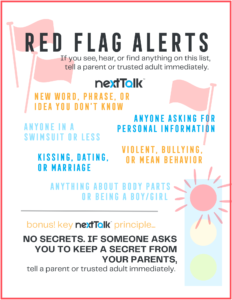
Today we’re talking about navigating friendships. I’ve got five key talking points for you. What I often see happening is parents are doing a good job of building open communication at home. They’re using some of our core principles, um, like the red flag reporting, and their kids are actually reporting things to them. And then the kids start confiding in their parents about what their friends are doing. And sometimes that creates some teachable moments and conversations in the home. So let me give you some examples. So, say you have an elementary boy, and he comes home and says, you know, my best friend Billy told me a new word on the playground today, and it is this. It’s a highly sexualized word that he blurts out. Well, that’s part of our red flag reporting guidelines, and it’s working. He’s talking to you. But how are we gonna respond to that about his friend exposing him to adult content? Like it really matters how we respond to that. The other thing is maybe you have a teenager and they are confiding in you that uh one of their friends is uh, you know, having sex or watching porn. How are you gonna respond to that? I think oftentimes our default is he may not be the best friend to hang out with. And I think we have to be really cautious about saying that off the cuff. Like that’s our default. Now, what I’m not saying is that sometimes there may be boundaries that a child needs to put in place with their friends because that friend is not a good influence, obviously. But it can’t be our default. And there’s a couple reasons why. So I want to kind of dive into this today because it really gets into the heart of our response. You know, one of the things is um when I saw myself doing this, when when my kids, when we were building this open communication and they would confide in me about their friends and their the faults of their friends, I saw that default response of maybe that’s not the best friend to have. And I realized I needed to shift. And when I did, I shifted to more of a, oh, first of all, thank you so much for telling me. Like you don’t have to carry that alone. That’s a lot to process, knowing your friend is struggling with that. Um, listen, I want you to know that we need to love your friend. We need to pray for your friend. And I’m so proud of you that you know that that’s not a wise choice because it’s not. There’s really bad consequences of that. They may not be doing a good job of protecting their heart and mind. They may be struggling. So that conversation, it’s not that I’m affirming the sin or affirming the bad choice. I’m not doing that, but I’m responding in a way that’s a default to love instead of a default to don’t hang out with that person. But I’m also creating conversations around the fact that it’s not a good choice. So we don’t lose that balance of love and truth in this conversation. You know, friendship, helping our kids navigate friendship is a big deal. I heard a quote recently that said, show me your friends and I’ll show you your future. That’s a pretty good quote. Proverbs 13 20 actually speaks to this. It says, walk with the wise and become wise, associate with fools and get into trouble. So I get asked this question in various forms a lot. Should I make my child quit being friends with this person? Should I pull my kid away from this family? And I want to speak into this first of all. Like when your kids are little, you have a lot of influence on who their friends are. Typically, that is the families that you hang out with. Like they’re your close friends, and then by default, they’re just hanging out with the same kids. So I think it’s really important that you are choosing wise friends, adult families to hang out with. And then your kids are gonna be in those same circles. As they grow, as your kids get older, you’re gonna have less control on who they hang out with. Now, that doesn’t mean you don’t have input through the years. It’s not just an automatic thing that happens where you can figure out who they’re hanging out with and then it’s an abrupt ending. No, it changes and evolves slowly as they grow. You’re gonna see your kids hanging out with people at school or even at youth group or or other places that you are kind of questionable. You’re like, oh, I don’t know how I feel about that. Do you think it’s really important not to just jump in right away and just ban it? Uh, you need to have some conversations around it. Like, like, what do you find fun about this person? Like, why do you guys like to hang out so much? And if they do struggle with something, point it, you know, talk about that. You know, I’ve noticed that she really struggles with this. And that’s fine. Like, we can love her, we can pray for her, but also like I don’t want you to start to struggle with that and it impact you, you know, so you can have those conversations. So I want to get into these five key talking points that we’re we’re gonna be going through because as we’ve navigated friendships through the years, these five things have been very, very important. Um, so number one, there is no perfect friend. I say this to parents a lot when they, you know, message me and they say, I think I should not let my kid hang out with this person. And I’m like, well, are you on offense one or are you on offense four? Like what level here are we at? A lot of times the default is not right. But if we’ve tried certain things and there’s a pattern in this friend that’s unhealthy, then that’s a different situation. But we need to understand that there will be no perfect friend. There’s no perfect person. Uh, you know, we live in a time of cutoff culture and you offend me and we’re done. That’s not really how I think we should operate here. Uh, I think we need to be really careful with this in the sense of the levels of alert that we’re seeing in this friend and their influence. So, you know, if you travel outside of the country, you can you can check the State Department’s website, and there’s like a level one, uh, you know, just be careful. Level two, increase caution. Level three, change your travel. You shouldn’t go there. Level four, avoid at all costs. You know, there’s there’s levels, and you need to identify what level you are at in this friend maybe being rubbing you the wrong way or impacting your child in the wrong way or hurting your child’s feelings. Like what level are we at? And what I’m telling you is so many times in my parenting, we were at a level one and I was responding in a level four, and it was not healthy. Doesn’t mean that sometimes it things don’t escalate to where we’re at a level four, and there needs to be some real boundaries put in place uh to protect you and your child and that sort of thing. But a lot of times I think we respond at a level four when it when it should be a level one response. So, so number one is that there’s just no perfect friend. And I say that because when I started this show, I use those two examples. You have an elementary age child coming home and saying, uh, on the playground today, you know, my friend told me about this new word, and it’s a highly sexualized word that you’re really upset about that your kid got exposed to. I don’t think we’re at a level one there. And that’s what I mean is he’s not perfect. The friend’s not perfect. The friend probably shouldn’t have exposed your kid to that, but but we live in a broken world, and people are gonna say things that are on their mind and they’re gonna be exposed to things. The other thing, too, is I use the example of the teenager. You know, uh, mom, my friend is having sex, and again, there is no perfect friend, but we do need to have some serious conversations around how that’s not a healthy choice at the age where they are, and having a conversation about that. So, again, just be careful of the cutoff culture. You’re never gonna have a perfect friend. Um, the other thing I want to talk about in this section is when a friend is struggling with something. So maybe they’ve their friend is has had sex, and it is more of a, oh my gosh, I wish I wouldn’t have done that, like a repentant kind of heart versus I had sex, I’m gonna continue to have sex, and I’m gonna be part of the hookup culture. That’s very different. And so, what is the heart about the sin that has been committed? And I think that is a big conversation when you’re navigating friendships with kids, because there’s a huge difference. And I would challenge you, parents, either way, like love these kids. So, in the in the elementary example that I mentioned about a highly sexualized word was told to your elementary age kid. If that were me, what I would do is lean into that. So I would say, hey, let’s have so-and-so over for a play group. And I would make sure it was in an open area that I, you know, that they weren’t alone or anything like that. And but I would lean in and try to get to know this child and ask him about his home life, ask him about what he likes to do in his free time. You’re gonna pick up on some things that probably your child may not, and then you can have a conversation in the background. You know, well, so-and-so’s uh his family’s going through a divorce. It must be a really challenging time. He’s he’s being shuffled between two households and he’s on screens a lot. He’s probably getting exposed to some things that he shouldn’t be exposed to. And we need to be careful about that because I don’t want him to keep exposing you to things. Uh, but I also have empathy for his situation. So we’re gonna pray for him. And um, you just have to keep reporting things to me when he shares new words with you that you don’t know what they mean. So that’s a way that I would I would handle that. It’s very important that our kids see us love people when they make mistakes. Really important because when your child makes a mistake, they’re gonna remember how you responded to their friend who made a mistake. So we’re modeling for them some unconditional love in the in the point. Now, again, just like I said, unconditional love doesn’t mean affirm the sin. Those are two different things. That’s the balance of love and truth best practices that we talk about a lot. Okay, number two, teach biblical conflict resolution. So, this is how we build relationships with people, friendships with ongoing conversation and boundaries and guidelines. This is very important. And this is found in Matthew 18 when we talk about uh conflict resolution, and you can go read this for yourself. But here are the steps that I would that I’ve taken from scripture and kind of applied to a parenting and a navigating friendships type of scenario. And this is in my book talk that I wrote almost a decade ago now. Um, and so you can go read that, but it’s in the the friendship chapter that I wrote. Um, so step one would be this go to that person privately and point out the offense. Okay, this is step one of biblical conflict resolution. So let’s set this up. You have a middle school boy, and he comes home and he says, Oh my gosh, my friend, and they’ve been best friends for a while, is now vaping. I’m really worried about it, mom. Okay. First of all, thank you so much for telling me. It’s not an automatic call to the parents, depending on that relationship, but you focus on you and your child. Thank you so much for telling me. You have a right to be concerned. As your, as his friend, like it’s our job to kind of have a hard conversation with our friends when maybe they’re going down a path that may not be healthy. What do you how do you feel if maybe you could FaceTime him or have a conversation in real life and just say, hey, I’m worried about you. Like, I don’t think this is healthy. It’s not good for your, you know, it’s not good for your body. There’s still research coming out on this on how it affects you. You know, your kid could even do his own research to share with his friend. But you go to that person directly and have a conversation. That is step one in biblical conflict resolution. Now, say this friend, you know, just blows him off and is like, you’re crazy. You’re just like such a rule follower, and I’m gonna do what I want to do. Okay, well, what would be step two? Step two, it says, bring one or two friends with you and try again. So get another friend that’s in your little group, and then two of you together go to him and say, We’re really worried about you. We don’t think this is the right path for you. Um, you know, please, will you consider stopping to vape or let’s get help if you are having trouble doing this? Okay. So that is step two. Um, step three, get a parent involved. This is the situation. Once the kids have tried to talk about it head on, then if you know the parent well enough, then there may need to be a parent-to-parent conversation. But before the parents get involved, it’s the kids trying to figure it out for themselves. These are life skills we need to teach our children. Don’t take it away from them because you’re just jumping in and trying to fix a problem or report a problem. We want the kids to try and resolve it on their own first. It’s just so many great skills, communication skills. And then the the fourth step of conflict resolution is if nothing works, move on. So this kind of go goes back to the the um the first one when I said there’s no perfect friend, and I talked about the levels of alarmingness. So here, if we if we model conflict resolution that’s found in the Bible, we do default to a place of love. We default to a place of, hey, I care about you. I want to point this out to you because I think I’m I’m very concerned about your decisions here. But if we keep exercising, you know, I talked about those travel advisories level four. If we keep going through the steps of biblical conflict resolution and the friend is going to continue down the path of vaping and then maybe add in other things like alcohol, that’s often what we see. It’s a little gateway to other things, then we may have to move on, which means we may have to limit our friendship with him because he’s not going to be a good influence on us. So we eventually get there, but first we default to love and we try and help the person and we we pray for the person and we come alongside the person and try and get them to turn from how they’re implementing this. Now, I do want to say if your kid needs to have this hard conversation, it’s gonna be tough on them. You can give them practical advice, but let them do the conversation on their own. Do not do this by text. Do not. We don’t want screenshots being shared with everybody. We just the tone of text is very difficult. So it really needs to be like a FaceTime or an in-person conversation. Um, but but go through these biblical conflict resolution steps. Again, this was found in Matthew 18, and I write about this more in talk. Okay, number three. So so we have, so we have number one, there is no perfect friend. Number two, teach biblical conflict resolution. Number three, and this is something that will come up as you navigate relationships and healthy boundaries. Okay. This is what I would always say to my kids. Think of a dartboard, like a bullseye, right? And again, I write about this in talk as well. The bullseye, the very center, that is you and Jesus. That is the most important relationship you will ever have in your life. All of your other relationships will be impacted by how you and Jesus function together. Okay, it will be a ripple effect. So if you are not connected and you’re gonna do your own thing, there will be an impact on your other relationships. If you are connected to Jesus and you’re always humbly understanding your faults and realizing you’re not perfect and that you need to grow too, that is going to impact all of your future relationships as well. So that that relationship with God is the center and it is the key. The the second ring would be your immediate family. So when your kids are little, uh, that’s going to be your immediate family, you know, mom, dad, and siblings. Um, as they get older and they create their own families, that will be replaced. Their immediate family, their spouse will be the second ring. And then the third ring may be, you know, the grandparents and the other families. But but when your kids are little, that’s that that bullseye is your kid in Jesus. The second one is your family, your immediate family. The third then circle, as we’re moving out on this bullseye, would be your inner circle friends. These are friends who you look up to, you take advice from because you value them. They need to have the same belief system that you have. When we talk about inner circle friends, we want to pray for one or two. I’m telling you, so many times what is what kids struggle with is they want 10 inner circle friends. And that’s normally not healthy because it’s a lot of different opinions and thoughts and and personalities. These are special people. And when we even see this within um the disciples with Jesus, like he had two or three that were were closer to him, right? And he talks about that in scripture. So these inner circle friends, then the the ring outside of that, a little bit wider, is your outer circle friends. Here you will have even more different opinions. You may have different belief systems at this level, but you would know that you’re operating from a different worldview, but your friends. This is healthy, I think, especially as they get older, but they need to be able to differ differentiate the inner circle. I’m gonna take advice from you, versus the outer circle, oh, I just enjoy hanging with you. And then the other circle on the outside of the outer circle is everyone else. And this could be acquaintances, you know, um, you could even have um a circle outside of this. Is that just people you know on social media, right? But as you see, everything stems from the relationship between you and Jesus. And I think there’s a lot of conversations to be had around the inner circle, outer circle friends. And a lot of kids want a big friend group. Okay, that’s fine for your outer circle, but but who’s your one? I would always say to my kids, do you have anybody in your circle of friends that you want to be like? Like you look at them and you think, wow, they’re changing the world. Like that’s a role model for me almost. I would ask them that because that’s the kind of inner circle friend you want. They’re the person that you are looking up to and giving advice. Okay, so so think of your friends like a dartboard. Number four kind of leads me into the difference between inner and outer circle friends. So, number four, know the difference between one-way and two-way friendships. Now, another way to say this could be recognize friendships that drain you and recognize friends that that are life-giving. Okay. So draining you or they give you life. They pour into you. This is a really, really important conversation because what I would see throughout the years of helping my kids navigate friendships is their expectations of people. They would get disappointed. Like, I’m constantly hanging out with this person, and it’s always about her. Like, we I don’t ever get to talk about who I’m crushing on or who I like or who I’ve got going on because there’s just so much happening. We have to recognize that’s a one way. Friendship. And that doesn’t mean it’s bad. That doesn’t mean it’s um you can’t be in it, but you have to lower your expectations. This person doesn’t have the emotional capacity to pour into you like you are pouring into them. You have to recognize that. When I was in high school and college, I was a horrible friend. So I look back on those friendships and there was so much drama with them, and I have so much regret. I was a one-way friend because I had a lot going on in my life. I was not mentally healthy. My bullseye, my relationship with Jesus, non-existent. I walked away from the church when I was a teenager. So I was all over the place trying to find peace in the world. And I was trying out all sorts of things. And that’s why my friendships were off too. And God bless the friends that I had that probably I exhausted them, but they kept pouring into me. As I’ve gotten older and my relationship with Jesus has gotten better, and that ripple effect has gone on. And I’m a better friend now. I’m more thoughtful. It’s a more of a two-way friendship with me. So sometimes as you’re navigating these issues that come up with your kids, you need to say, this may be just a one-way friendship, and that’s okay. But you just need to understand that maybe this person needs to be on the outer circle and not on the inner circle because they’re not going to be able to give you advice and you wouldn’t want them to right now because they’re struggling. They wouldn’t have the best advice. As I’ve helped my kids navigate their friendships over the years and kind of designate them as a one-way or two-way, and they’ll fluctuate. Like you may have one friend that is a one-way for a little while, and then they get really healthy. They meet Jesus, they get in counseling, and they are very healthy and they become a two-way friendship. That’s great. But one of the things that’s been really cool for me is as I’ve helped my kids navigate this through the years, it’s helped me with my friendships. Like it’s really helped me with friends that I’ve struggled with. Like, why am I always leaving this lunch feeling depleted? Well, it’s because she has a lot going on. And right now she just needs me to listen. But she doesn’t have the capacity to give back. And that’s okay. I’m gonna love her, I’m gonna pray for her, I’m gonna be a friend, be a good one-way friend right now. But I lower my expectations of her because she’s just got so much going on. So this is just a good way to talk about people so you don’t demonize people, but um, and and you realize no one is perfect. There is no perfect friend, but to help your kid differentiate their friendships. Okay, number five. You know, look in the mirror. I say this on so many shows because it’s just a next talk core practice. But how you are a friend and how your kid sees you navigating your own friendships is gonna be the way they navigate theirs as well. As always, we are the model. Through the years, I have talked to my kids a lot about how, you know, they’ll come to me and they’ll say, Man, this friend is just draining every time I hang out with them and I love them and I still want to be their friend, but it’s a lot. And I will say, man, you’re being the kind of friend that I needed in high school because I was like your friend. I was draining my friends, and I you don’t realize it. You don’t realize it when you’re struggling that much. Um, the other thing I want to say about this, look in the mirror and how your model, your friendships, is this when you do find a really good friend, and you know, they’re you’re you’re you’re core on your beliefs, you get advice from them, you trust their advice when you are lucky enough to find that person, and it was, gosh, I was probably 30 years old, 30 years old before I found that person, uh, my best friend. And here’s what I want you to say, and she would say this if she were right next to me too, is this she’s also not always right. I trust her advice, I do, and I get her opinion. And just like with my husband, I get his opinion and I trust his advice, but neither one of them are Jesus. Sometimes God is asking me to do something that may not make sense. It may not be the advice I’ve been given, but I have prayed about it and I know it aligns, you know, that I know that God is telling me to do something. And another thing I want to say about this point too, anybody who’s telling you God is calling me to do something, if it does not align with God’s word, it is not God telling them to do that. Okay. God can only call you to do something that aligns with his truth and his scripture. So we have to be careful about that as well. Um, but just because you do find your inner circle person, and and we need to pray for our kids to find that person, we need to pray for our kids to find their people, you know, pray for the one. Even when we do, that person is still not perfect. That person is still not God. So you cannot replace that person in your bullseye. It’s just like when you get married. For a long time, I uh sometimes when we first got married, Matt was in my bullseye and he couldn’t be. That was not healthy because at some point he’s gonna do something that’s not right because he’s a human and he’s gonna disappoint me. People always disappoint. Your bullseye has to be you and Jesus. That is the overflow of all of your relationships. Listen, you’re gonna walk your kids through hard stuff. What I’m challenging you to do today is don’t just put a band-aid or an emotional, flippant response of don’t hang out with that kid anymore. Dig in. Because it’s an opportunity for your kid to see that one, there is no perfect friend, there’s no perfect person. Two, how to go through the steps of biblical conflict resolution. Like what a learning experience that you can walk through your child with that. Three, think about friends and all of your relationships like a bullseye. Where’s that inner circle friend? How does that differentiate between an outer circle friend? Four, help you realize the difference between a one-way and a two-way friendship. This will help you have more empathy for your friends and also adjust your expectations of them. And number five is it will help your kid look in the mirror. These are so many great life-giving skills to give your kid about their relationships, about communication. This is going to impact how they are with their employer relationship, with their spouse as they date. Don’t miss these conversations because your kid’s friend just made you mad and exposed your kid to something and now you want to cut them off. Don’t miss this. Teach your kids how to navigate friendships in a healthy way.
SPEAKER_00
Next Talk is a 501c3 nonprofit keeping kids safe online. To support our work, make a donation at nextalk.org. Next talk resources are not intended to replace the advice of a trained healthcare or legal professional, or to diagnose, treat, or otherwise render expert advice regarding any type of medical, psychological, legal, financial, or other problem. You are advised to consult a qualified expert for your personal treatment plan.
This podcast is not intended to replace the advice of a trained healthcare or legal professional, or to diagnose, treat, or otherwise render expert advice regarding any type of medical, psychological, or legal problem. Listeners are advised to consult a qualified expert for treatment.
Subscribe to our monthly newsletter for all the latest podcast titles, events, and nextTalk news.
nextTalk started in a church with a group of parents who were overwhelmed that their young children were being exposed to sexualized content. Today, we’re a nonprofit organization in the state of Texas and an approved 501(C)(3) entity by the Internal Revenue Service.