
In this special episode, Mandy sits down with her 18-year-old son, Carter, before he leaves for college to hear his honest perspective on her parenting, communication, phones, boundaries, and growing up in a digital world. Together, they reflect on what helped build trust in their relationship, what parents sometimes get wrong, and why creating a safe space for conversation matters so much during the teen years.
In this special episode, Mandy sits down with her 18-year-old son, Carter, before he leaves for college to hear his honest perspective on her parenting, communication, phones, boundaries, and growing up in a digital world. Together, they reflect on what helped build trust in their relationship, what parents sometimes get wrong, and why creating a safe space for conversation matters so much during the teen years.








Transcription is done by an AI software. While technology is an incredible tool to automate this process, there will be misspellings and typos that might accompany it. Please keep that in mind as you work through it.
SPEAKER_03
Welcome to the Next Talk Podcast. We are a nonprofit passionate about keeping kids safe online. We’re learning together how to navigate tech, culture, and faith with our kids. Today on this show, we have a first-time guest that I’m so excited about.
SPEAKER_01
Yes, I am too.
SPEAKER_03
My son. He’s 18 now. Yeah. He’s never been on the show. He’s heard a lot about it, been to some events.
SPEAKER_01
Yeah.
SPEAKER_03
Yeah. And so I really wanted to get his perspective before he headed off to college. But before we dive into my questions, tell the people a little bit about yourself, son.
SPEAKER_01
Hi, everyone. I’m Carter. I’m just graduated high school. I’m excited to go to college. I’m going to be going to a school in Texas. I’m planning to study business and maybe some ministry. I’m not super sure yet. I’m really big into sports. I played basketball. I played football when I was younger too, but I still love football and basketball. And yeah, it’s pretty much yeah.
SPEAKER_03
You’re looking forward to playing intramurals.
SPEAKER_01
I am. I’ve been preparing.
SPEAKER_03
It’s you know, the athletic journey in high school was way more than we anticipated. Like it was a big commitment for you. Yeah. And uh I saw you very disciplined, very proud of all the hard work you put in.
SPEAKER_02
Yeah.
SPEAKER_03
But I think now you’re getting you’re excited to kind of get back into like doing the doing the game for fun.
SPEAKER_01
Yeah.
SPEAKER_03
Yeah.
SPEAKER_01
Not having to do it every single day if I don’t want to.
SPEAKER_03
Or at 5 a.m. if you have to.
SPEAKER_01
Yeah.
SPEAKER_03
Missing the 5 a.m. workouts.
SPEAKER_01
I’m missing the 5 a.m. workout so much.
SPEAKER_03
Yeah. Yeah. Um, okay. Well, I’m glad you’re here. I’m real excited for this. I feel like you, you know, your older sister, she and I did a show before she left, and I feel like she was my guinea pig. Like dad and I just did not know what we were doing. Maybe. And I feel like we we made some turns and and got a little bit more, you know, uh, we leveled out a little bit more with you.
SPEAKER_01
Yeah, definitely.
SPEAKER_03
Maybe. I don’t know.
SPEAKER_01
I’m definitely out of the both of us, I may be the luckier of the two.
SPEAKER_03
Well, the the firstborn kid in each family. I mean, like it’s just the first time we’re parents.
SPEAKER_01
You don’t know what to do.
SPEAKER_03
We’re figuring it out. We’re figuring it out as we go. Okay, so I’m gonna start this show. I I I did a show with your sister and I asked her two questions. I’m gonna ask you those same questions. But then I also got some questions from some of our Instagram people. I like put a question out there and I actually got some really good ones back. So I kind of went through those. So let’s first start out with um the first two questions. What I got right, what dad and I got right, what we got wrong.
SPEAKER_01
Yeah.
SPEAKER_03
So I don’t know how you want to start out. If we you want to start out with the right or the wrong.
SPEAKER_01
I’ll start out with the right because I think the right, because like there’s a lot more right than you did wrong.
SPEAKER_02
Okay, that’s good to know. That’s good to know.
SPEAKER_01
I’ll definitely start with the right. I think what you did right was like creating like a safe space to talk to, which sounds like cliche because I guess it’s like the whole like thing of your like whole like purpose of your organization. But I think you like truly did a good job because like I wouldn’t feel like if I had something to tell you, it wasn’t like oh I’m gonna get in trouble, or oh, I don’t want to tell her because she’ll take away my Xbox or anything. It was like I can tell her, and I did like whenever I did tell you, I felt way better. Yeah, and like the reason, like, for example, if I had something I didn’t tell you right away, it wasn’t like out of fear that you’re gonna take something, it was just like I need like needed the time to like think about it. But whenever I waited a long time, that’s when it like got way worse.
SPEAKER_03
I think that’s interesting that you said that because I noticed something in you as you got older. So the first thing was we we started this trying to talk about everything with you when you were in kinder. Yeah, your sister was fourth grade, so we had already started we had already missed so many years with her of trying to build the communication, and thank God we we recovered fast with that. But with you, we started early. I remember when I would pick you up in Kinder and you would get in the car and you would just download stuff to me. Do you remember that? Like before we even got out of the parking lot, you’re like, this person said the F word, this person got in trouble. And then it was like, it was almost like confession, and then you got it off your brain, and then you were fine. You didn’t want to talk about it anymore. But it was like you had been carrying this stuff all day.
SPEAKER_02
Yeah.
SPEAKER_03
But as you got older, what I noticed in you was sometimes something would happen or something would be bugging you, and you would process it for a couple days first, and then you would come tell me to be like, okay, I just need to get this off my chest.
SPEAKER_01
Yeah.
SPEAKER_03
Is that a good observation, you think?
SPEAKER_01
Yeah, definitely. Because I feel like a lot of the time, and especially in like through high school, you hear like so much stuff that like some of the stuff like it may like bear on you a little bit at first, but then you kind of think about it and you kind of like you kind of just like move on, like naturally. Yeah. But that way I could like filter through some of the stuff and be like, okay, that’s not right, but that’s not like wearing weighing me down. Yeah. But then with the stuff that was weighing me down, I could talk to you about it.
SPEAKER_03
Well, I think that’s really good because as kids grow up, and I think we kind of missed this with your sister, and we tried to pivot a little bit with you, is you know, we were trying to create this line of communication. Like you just report everything to me, you can talk to me, and those sorts of things. When you were little, it worked great. As you got older, you are learning to discern what you need to tell me and what you don’t. Yeah. Because, like you said, you can walk down a middle school hallway and hear the F-word 50 times, and it’s like, I don’t need to tell her every time that I hear something like that. But then if I hear something new and I keep thinking about it and it’s really weighing on me, okay, let’s talk about that so I can just get it off my chest.
SPEAKER_01
Yeah, definitely.
SPEAKER_03
So you learn to kind of discern.
SPEAKER_01
Yeah.
SPEAKER_03
And and you will continue in college. I saw this with your sister, you know, she would call me on certain things, she wouldn’t call me on other things because she’s handling it.
SPEAKER_01
Yeah.
SPEAKER_03
As you’re growing. Yeah. Okay. Okay, that’s awesome. Well, I’m glad to know we got that right because it is the sole mission of next talk and both of my books.
SPEAKER_01
Yeah, that would definitely be a little rough if you if I had some comments about that one.
SPEAKER_03
Well, and I guess the thing I want to say too is we we got it right in the sense of we created a culture of open communication. It doesn’t mean we handled every conversation right, though. I mean, there were things that I said that were probably not appropriate, or sometimes I did go crazy parent mode.
SPEAKER_01
Just here and there.
SPEAKER_03
You’re the kid that’s held me accountable. Like you’ll see a look on my face and you’ll be like, don’t go crazy. Don’t go crazy mom mode. Which I love. I love the accountability. Okay, so that makes me feel good. Now we can go into the what I got wrong, so that I’m ready for my heart to hear it.
SPEAKER_01
Yeah, okay. Well, this like this wasn’t really like a big one either. I don’t know how much of this is like parenting and how much is of this is just like genetics, too. But definitely I feel like the way I’ve been raised, I overthink like a lot. And like overthinking is good, like for the most part. But also it’s like, and it’s definitely helped me stay out of some bad situations, but also at the same time, it’s kind of restricting because like I’ll just do like everyday things. Like, for example, I played basketball, or I did play basketball in high school. So when I play basketball, if I’d like go and like try and shoot, I may like overthink and be like, what if I miss? I’m always thinking about like the what if this happens. When like reality, the what if is like physically impossible. I’m still thinking like what if it happens.
SPEAKER_03
Okay, this is a really good point, said, because you know, sometimes the overthinking is good. Like when you’re with a group of friends and they’re getting ready to do something illegal, I do want you to stop and overthink, right? I don’t want you to just go with the flow.
SPEAKER_01
Yeah.
SPEAKER_03
But this is the downside of that is if I as a parent, if I’m trying to get you to think through things before you just react or go along with it, sometimes it can create this um, I don’t know what it’s called, fear, I guess, or or the what if. Yeah. You said the what if. Um, so we do need to be careful with that.
SPEAKER_01
Yeah, definitely.
SPEAKER_03
And I think that it’s a delicate balance for sure because we don’t want to create anxiety or fear in our kids.
SPEAKER_01
Yeah.
SPEAKER_03
But we also don’t want them just going along with it, whatever. So it’s a delicate balance. Uh, what else do you think we got wrong? Anything else that comes to mind?
SPEAKER_01
Not really anything that comes to mind that I’m thinking about it.
SPEAKER_03
Look, so there’s nothing that you’re like, and this will probably change in the next five to ten years. The answer to this will probably change as you grow. Yeah. But when you have kids, like what would you do different? Like, is there anything that immediately comes to mind?
SPEAKER_01
I mean, not really. Maybe like I would maybe see like a little stricter at times. Just like a little bit.
SPEAKER_02
More strict?
SPEAKER_01
But just because for me, like I love it, but I like because I’m the baby of the family. Yeah. You’re definitely like a little like less strict with me compared to my sister. Like, for example, my mom would like tell me to put away my laundry, and like she’s like, all right, you need to do it tonight, and then I don’t do it tonight. I do it like three days later, but I don’t get in trouble, you know.
SPEAKER_03
You used to get in trouble.
SPEAKER_01
I did you so I mean it makes sense because I’m getting old.
SPEAKER_03
Well, here’s the thing you’re 18 now.
SPEAKER_01
Yeah.
SPEAKER_03
And I’m you’re getting ready to go to college.
SPEAKER_01
Yeah.
SPEAKER_03
And so I’m learning to pick my battles.
SPEAKER_01
That’s true.
SPEAKER_03
Right? So I put I may put my foot down about something that like a party or or I don’t know, something that you want to go do that I’m like, I’m gonna have a strong opinion on that. Yeah. But this is like, okay, it’s laundry at this at this point. But I do think, you know, when you were little, we had the chore charts, and I was a little bit more strict. Yeah, but you would have consequences, but I definitely would say, and your sister would probably agree that I am a little bit more lenient on you.
SPEAKER_01
Yeah, definitely.
SPEAKER_03
And I think that’s a baby thing. It’s you’re my you’re our last one, and we’re kind of like, okay. But you’re a good kid too.
SPEAKER_01
Yeah.
SPEAKER_03
And so I’m like, I’m gonna pick my battles here.
SPEAKER_01
Yeah, and it’s not like you’re setting me up for failure, anyways, because like if I don’t put away my laundry, it’s not because I’m like not disciplined, it’s just because I like just don’t want to.
SPEAKER_03
Well, maybe when you get to college and you’re on your own, like you just have to decide what kind of person you’re gonna be. Are you gonna put away the laundry right away, or is it gonna be in your chair right now?
SPEAKER_01
I think I’ll definitely be more motivated in college.
SPEAKER_03
I think so too.
SPEAKER_01
Because like when I have to go do stuff, like I’m more I’ll be more independent. So I’ll be more of an early rhythm of doing stuff myself.
SPEAKER_03
Yeah, I agree. I agree. And well, and I think too, basketball disciplined you so much. Like, I don’t worry about you not getting to class.
SPEAKER_01
Yeah, definitely.
SPEAKER_03
I really don’t because you’re so disciplined and you’re working out and everything, and that’s the beauty of playing sports, I think. I think it really does help with your discipline.
SPEAKER_02
Yeah.
SPEAKER_03
Next question. This came in from a mom on Instagram. Okay. Top two tips for moms with teen sons who don’t talk much.
SPEAKER_01
Teen sons who don’t talk much.
SPEAKER_03
Yeah. What would you say to a mom who who their teen boys just don’t seem to talk a lot?
SPEAKER_01
I definitely say, like, obviously, you’re looking to like create the safe place. And I would say to do that, like, it’s gonna be a little bit different for everyone. I know what worked for me and what I would advise is try and create, like, not necessarily like a strict reward system, but try and like an incentivize in some way. So, like maybe like what I did with my mom when I was little, if I told her something, I’d get a new app on my iPad, and that helped me a lot because it was like because I’m like, I think very logically. So, like, if I heard something and it was weighing on me, and I told my mom and got a reward, I was like, Yeah, that why would I not do that? So, I definitely think try and create like a some some type of reward system where like it doesn’t have to be like money or apps or something. Maybe you go like to dinner or go to a sports game or something like that, or just have like a family time, some sort of like reward.
SPEAKER_03
Praise them anytime they confide in you. And I would say, even if they’re confiding in you a way they’ve messed up, like I really messed this up, mom, and now I’m in a situation. You know, sometimes as parents, our mind goes to how we have to fix it instead of just looking at your kid and saying, Thank you for sharing this with me, so that you don’t have to carry it by yourself. Yeah, like that’s what I’m here for. I think that’s really good. Okay, so that is your first tip, right? What would be your second tip?
SPEAKER_01
My second tip would definitely be for the parents to apologize to the kids and be like willing to like take responsibility for when they mess up. Because I feel like a lot of kids, not necessarily me, but like I feel like typically, especially kids like as they get older, they get like rebellious, like that’s like the stereotype. And so if you hear your parents take accountability, it’s like, oh, maybe they’re not against me. Like maybe they actually want to work with me.
SPEAKER_03
I like that. I think it brings down walls, like in any relationship, when you kind of admit, I’m sorry I did this, or I’m sorry I came across that way, or whatever. We apologize to each other a lot in our home. And what’s great about it is that you and your sister apologize when you guys are mean or you know, because I think you’ve seen us do it. Yeah, like so much. We apologize so much, even when we respond badly.
SPEAKER_01
Yeah, it makes it seem like the parent, like kid dynamic, make it seem less like a powerful thing, like you’re gonna tell me this because I’ve told you to, and more like of an actual relationship.
SPEAKER_03
Yeah, I agree. I agree. I do want to go back to the reward system because I think I’m gonna get some pushback on that a little bit from parents who are listening. I want to say um, I to me, it was a positive reward system. Like when you first started playing, before you even had a phone and you were on the iPad, this was something like key when we started learning to be like a next talk family was when you guys would report things to me, I would say, thank you so much for telling me because you told me you can get a new app today. And that kind of taught you the more you tell me about what’s happening on that screen, the more freedom you’re gonna get because the more I can trust you that you’re not gonna get in a weird situation online and not tell me about it.
SPEAKER_01
Yeah. And like as I got older, I would still tell you stuff. I’d be like, I don’t really need apps anymore. But by that point, it was already a habit and I recognized like how it like helped me to tell you stuff. So I was like, Yeah, I mean, even if I don’t get rewarded, this like just like as I got older, I was like, Yeah, I may not get rewarded, but I’m still gonna tell you stuff.
SPEAKER_03
Yeah, as you got older, you really didn’t get rewarded, but you tried to manipulate me with it.
SPEAKER_01
How?
SPEAKER_03
Do you remember that time you came into my office after school and you were like, Mom, last night I told you what happened online and you had taken care of it, you had shut it down, you had reported the guy. I mean, he was a weird situation, but you were old enough to know what to do. But you were like, Because I told you and I’m safe, I mean, like, can I get 20 bucks for remember that?
SPEAKER_01
I do remember that.
SPEAKER_03
I and you were a scammer and I would normally say no, but then I would think about it and then I’d be like, Okay, you’re a good kid. Yes, you can.
SPEAKER_01
Every so often. It wouldn’t be an everytime thing. Trust me. If it was an everytime thing, I’d be rich right now.
SPEAKER_03
Yeah, that’s true. Because you’ve told me a lot.
SPEAKER_01
I would not be wearing this blue shirt.
SPEAKER_03
I really think it’s because we started with you when you were in Kinder being so intentional. You’ve always been good at telling me things that are that raise red flags in your brain.
SPEAKER_01
Yeah, definitely.
SPEAKER_03
And you know, we’ve we’ve had that. I mean, we’ve just had that forever. I remember when you were really little, when you um first started playing Xbox, and somebody, it was somebody you knew in real life, but they cussed you out or something. And immediately you came and told me. And it we didn’t need to do anything. I mean, it was just a friend cussing you out, but it was like, thank you for telling me. How did that make you feel? And because they were calling you stupid and all this stuff, and a little kid hearing that for the first time, it’s like, what in the world? It’s abrasive. So just things like that, simple things. I didn’t make you stop playing with that kid, I didn’t make you turn the Xbox off. I just was like, okay, people are gonna say mean things. Let’s talk about it. Yeah, how that makes you feel. It’s just kind of processing it, making it normal.
SPEAKER_01
Yeah, exactly.
SPEAKER_03
Okay, okay, those are good. So top two tips for moms of teen sons is uh is um uh one was reward system, reward system. Two was apologize. Okay, you didn’t ask me, you asked my son, but I am also gonna say, because I don’t know if Carter will say this, but moms often make conversations weird. We draw them out. And a lot of times what happens is Carter will be trying to tell me something, and what he really just wants me to say is, okay, thanks for telling me. I’m glad you got it off your chest. But then I go into a teachable moment scenario.
SPEAKER_01
And that’s not necessarily bad to go in a teachable moment, but it’s when you start repeating yourself.
SPEAKER_03
That’s when he gets better.
SPEAKER_01
Over and over and over. I hear I heard the teachable moment. I’m good. I’m good, and the conversation can end.
SPEAKER_03
Well, your sister told me too one time on a show. She said, Um, mom, mom, I know I need to tell you, I know it’s bad, or I wouldn’t tell you. So you get to a certain age, you don’t need the teachable moment anymore. Yeah, exactly. You know, I think when you’re maybe seven, you need the teachable moment. When you’re 17, you don’t. It’s just thank you for telling me.
SPEAKER_02
Yeah.
SPEAKER_03
And so sometimes you will get irritated with me because I will repeat the teachable, like why vaping is bad or why this is bad, like 300 times. And you’re like, I got it.
SPEAKER_01
Yeah.
SPEAKER_03
Shut up. I got the why, shut up, woman. He would never say that to me. But that’s what’s going through your brain.
SPEAKER_01
Maybe.
SPEAKER_03
Yeah. Yes.
SPEAKER_01
Maybe. Yeah.
SPEAKER_03
Yeah. So I I would say that just don’t be repetitive.
SPEAKER_01
Yeah.
SPEAKER_03
Short, sweet, get to the conversation. Uh, one thing I’ve learned over the years is when you’re having a conversation with your kid, think about one thing that you want to get across to them, say it once, and try and move on and make sure they get it. And then, and then then these are quick conversations, like three minutes, five minutes. These aren’t like 30-minute conversations. I think, especially with teen boys, that’s important.
SPEAKER_01
Yes, sure. Definitely.
SPEAKER_03
See, even on the show, you’re like, move along, mom. I can see it in your face. Maybe I can see it in your face. Mom, we got the point. Okay, okay. What would you tell a mom of an 11-year-old child who is begging for a phone? Another Instagram question.
SPEAKER_01
What grade is 11th? Or yeah, what grade is 11th?
SPEAKER_03
I think that’s probably around sixth grade.
SPEAKER_01
Yeah, it’s like in the fifth, right? That’s what I would say.
SPEAKER_03
Fifth or sixth.
SPEAKER_01
And they’re begging for a phone.
SPEAKER_03
Yeah.
SPEAKER_01
Okay. Well, I feel like there’s definitely a lot of factors here. I would say like it depends like why they want a phone. Because if they want a phone for like to get social media right away, I’d probably say that’s no. Like, definitely no to social media. Because I feel like they’re definitely too young to have social media. Because, especially for like if you’re 11, once you start scrolling, it would definitely be hard to stop. I mean, it’s hard for me to stop. And I’m a lot older than 11. So I would definitely start out asking them why they want the phone. And if it doesn’t have anything to do with social media, I’d I’d think about it, think about the reason. And I’d probably give them a phone, but on a couple conditions. One, if they see anything, they have to show me, obviously. And then two, I’m gonna give them like a set apps, like they’ll they can have these apps to start, and probably not a lot. And so then if stuff comes up, because it’s gonna it’s gonna come up, they can come show me, and then like I talked about earlier earlier, they’ll reward I’ll reward them with the apps, and that’s how like build the trust. And then over time, obviously, they’ll get social media and all this. So I personally would give an 11-year-old a phone, but you have to make it a big deal of like about like trust and everything. I think that’s super important, like how you give it to them. Like, I don’t think you should just give it to them be like, okay, here, do whatever. You have to emphasize it as like, okay, I’m trusting you. Here’s what I need you to do in return. And then if not, you have to be willing to take it. You can’t like if they if they can’t, if you can’t trust them, like they don’t show you stuff or they they’re on it too much, you don’t necessarily just have to like take it away and not give it back, but maybe like talk to them about like, hey, can we reduce your screen time or something? You have to be like willing to you have if you’re willing to give, you have to be willing to take away.
SPEAKER_03
Well, and I think that it’s it could be easy started when you ask the why question, right? Like, why do you want this phone? Okay. So what if it’s like to communicate with my friends or to play this certain app? I think a lot of things now could be done on an iPad. Like they could text their friends from an iPad. They could, because we’re not giving them Snapchat, like you said, or Instagram or anything like that at 11. So there could be a compromise where it’s like, well, let’s have a family iPad and you can. Do all of these things on that, you report things to me. If you keep reporting things to me, then eventually you can earn the phone.
SPEAKER_02
Yeah.
SPEAKER_03
And so it’s almost like you’re like what you said about incentivize. Um you can do that from an iPad to earn the phone. And so you can stair step it, which is what we did. We stair stepped it.
SPEAKER_01
I would definitely say though, if you’re doing that with an iPad, I would recommend getting the iPad before. Like if they’re begging for a phone and all their phone friends are getting phones and they’re gonna get an iPad, they it’s weird. Yeah.
SPEAKER_03
This is really where it comes in where if you could have the set group of friends all kind of delay together, it would be better. It would be better. Yeah. Yeah. So okay, and I would also add it in whether it’s an iPad or a phone or whatever, no no screens in bedrooms. Yeah, for sure. Or behind closed doors, even like in a game room. And so that’s a rule that we’ve had forever. How do you feel about that rule? Like, is it something that you think you would do with your own kids?
SPEAKER_01
Yeah, definitely. I really like that rule. Because I mean, obviously, there’s a lot of reasons that you give the rule. I just like it because I can sleep better. Because I’m not like like there’s one time I was at my friend’s house, and obviously I was at my friend’s house, and so I can’t like go up and put my phone in his living room while I’ll sleep. So I just slept with it next to my bed. I kept like waking up in the middle of night to check it, and I slept horribly, which like I mean, I’m not at my house, so maybe that’s why. But I was just like distracted by even when I thought I was like fully asleep.
SPEAKER_03
Okay, so you’re getting ready to go to college and being in your dorm room. So this is a self-discipline thing that you’re gonna have to have because I mean, I don’t even check it now, though. Quite honestly, you’re at the point, like I go to bed before you now. Yeah, you could have it in your bedroom at night if you if you want it. I mean, like, you know, you’re 18 now, you’re getting ready to go to um, but I wake up every morning and it’s in the office on the charger, like or on the kitchen island. Yeah, because it’s just been a habit your whole life. So you gotta carry that habit on because I think it’s a good one. Yeah, not to wake up in the middle of the night for sure. I remember when you first earned a phone in middle school and you would put your phone on our mud bench back then. That was kind of where it was when we first all when when you were first earning a phone, the charger was at the mud bench, and uh you would wake up and you would have like 200 messages. And I’m like, Did anybody sleep through the night? But most kids are up texting all night. Yeah I remember some days you would be like, I’m not even reading all these.
SPEAKER_01
I I still don’t.
SPEAKER_03
Like you still wake up. Do you still wake up to a lot of snaps? Or I mean now you have Snapchat more than probably group text.
SPEAKER_01
Yes, some snaps sometimes, but not really.
SPEAKER_03
You think as your kid as you guys have grown, your your friends are sleeping more and less? No. No, they’re still out, they’re still out.
SPEAKER_01
I just have notifications off. You have notifications off so they don’t bug me.
SPEAKER_03
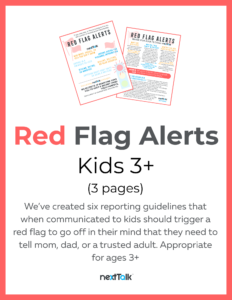
Yeah, okay. Okay. All right, okay, so mom of 11-year-old. Um, I love his answer because he literally laid out the next talk red flag reporting, the earning, the stair stepping, the not, you know, we always say teach your kids a step-by-step process, how you teach them how to drive a car. He kind of laid that out. They don’t get a phone and they download seven social media apps. It’s not how this works. It’s it’s been a step-by-step approach. So um, it’s funny because you don’t have the official next talk language that we use, like the red flag reporting. Do you even know what that is?
SPEAKER_01
Yeah.
SPEAKER_03
Okay, that’s the list. Yeah.
SPEAKER_01
I mean red flag alert.
SPEAKER_03
Red flag go off in your brain. We used it when you were smaller, but it was just it’s been so natural to us in our home, our language. So anyway, okay, here’s a good question that I got from an Instagram. What are your favorite traditions? That’s just kind of good personal question.
SPEAKER_01
Yeah. Uh my favorite traditions are definitely Chris not Christmas Eve, New Year’s Eve. There we go. Because we have family friends all over and we play a bunch of games. We play football and basketball. We play Family Feud. It’s all just really fun.
SPEAKER_03
You’re always Steve Harvey.
SPEAKER_01
Yeah, I am. Yeah. I make a great Steve Harvey. They actually call me Steve Gnarly.
SPEAKER_02
He dresses up like Steve.
SPEAKER_01
Yeah.
SPEAKER_02
Yeah.
SPEAKER_01
Uh Christmas Eve, I stutter on that. That’s also fun. We’ve recently started. We go to we usually go to my grandparents and celebrate Christmas with them the night of, and then my other grandparents the morning of. But now we still do that when we can. But now we’ve been starting to go out tonight, like a family dinner night before, or on Christmas Eve. So that’s really fun. And then I think also just like random like game nights and family movie nights. Like we’ve been getting to Catan recently. It gets heated. It gets really heated.
SPEAKER_02
We’ve had some we’ve had some real bad family disagreements because of that boyfriend.
SPEAKER_01
We’ve had some table slams. It gets some has anyone cried from that yet?
SPEAKER_02
I think dad had to apologize to you one time thinking about apologies when he’s when he hit the table because he was mad.
SPEAKER_01
But it definitely gets heated. But even like other games, it’s just like super fun to have like family time like that. We’ve had some we’ve had some a lot of tears, especially because of Clue.
SPEAKER_02
Oh, Clue, yeah.
SPEAKER_01
Do you remember the rope incident?
SPEAKER_02
Oh, yeah, I remember the rope incident on Clue.
SPEAKER_01
We like kept asking if anyone had rope, and it went all the way through, like the entire round.
SPEAKER_02
Nobody has rope, nobody has your rope.
SPEAKER_01
Everyone concluded they’re like, all right, yeah. We no one has rope. Rope’s a killing thing. We opened it up, it is not rope. And we realized one of the players had a rope the entire time. They just didn’t realize.
SPEAKER_02
One of our family members.
SPEAKER_01
Yes, and that family member also put rope as the killing device.
SPEAKER_02
So we were like pulling our hair out.
SPEAKER_01
Ever since then, I don’t think I’ve really played Clue again. I’ve only played a couple ones.
SPEAKER_03
Yeah, we yeah, we moved on to Catan.
SPEAKER_01
Yeah.
SPEAKER_03
Yeah. Uh on vague on spring break recently, man, we played a lot of Caton to the point where we kind of all got sick up. We’ve taken a break right now. So we’ll see what the summer holds. You’re getting ready to yawn.
SPEAKER_01
Yeah, and I’ve been battling yawns the last couple minutes.
SPEAKER_03
Yeah. Okay. Is there anything else you would like to say to parents who are listening? Most of our audience are moms and dads, and they’re out there fighting for their life, trying to raise their kids, and you know, have a good relationship with them, but also have rules and boundaries and keep them safe. And I mean, also I think, you know, we were talking about phones. Like now with AI, I mean, there’s a lot more tech out there than even when you were in middle school. And so it’s scary for parents. Yeah. Any advice for them? Just generally.
SPEAKER_01
I mean, I definitely say focus more on having a relationship with your kids and being like a parent. Like if your kid’s talking to you about some game and you have no idea what’s going on, just pretend you know what’s going on. Like ask them about it. Because I remember I would always like tell my dad about like Fortnite or Madden, whatever I was playing at the time. And even if he like didn’t know what was going on, he’d be like, Oh, really? That’s cool. And it would make me feel like a lot more, it’d just make you feel like a lot happier because he like seemed interested in it. I that actually happened two days ago.
SPEAKER_03
So well, and a lot of times too, when you were younger, we would actually play the game with you. Yeah. Do you remember when I tried to play Minecraft with you?
SPEAKER_01
Oh, and you got motion sick?
SPEAKER_03
I got that was terrible.
SPEAKER_01
But you tried playing Fortnite too.
SPEAKER_03
And then what was my Fortnite handle?
SPEAKER_01
Like Mama Birds or something like that.
SPEAKER_02
And so Mama Bird was like running around killing all these people.
SPEAKER_01
No, you did not get a single kill.
SPEAKER_02
I did not.
SPEAKER_01
I actually don’t think you knew how to pick up a gun.
SPEAKER_02
I did not. And you were screaming at me to get out of the storm or whatever it was. Do you remember that?
SPEAKER_03
I was just running around.
SPEAKER_01
That was bad.
SPEAKER_03
But but you liked it. So I kind of wanted to know a little bit about what was going on. I wasn’t good at it, but I made an effort because it was important to you. Yeah. And then I think the relationship is great too. But then parents also have to have rules. You’re telling me I should have even been more strict.
SPEAKER_01
Yeah.
SPEAKER_03
Especially about your laundry.
SPEAKER_01
Okay. Can’t change it now.
SPEAKER_03
All right, son. Well, thanks for taking the time to do this.
SPEAKER_01
Yeah, definitely. Thanks for having me.
SPEAKER_03
I appreciate you. Maybe, maybe after you get at college, we’ll come home and we can revisit this because as your mind expands and you see other people’s perspectives, you may have more to say about how we parented, like good and bad. So maybe we can do another show where you’re like, I have some more bad stuff I want to share on this show.
SPEAKER_01
This, this, this, and that.
SPEAKER_03
Yeah, you may. You may. All right. Well, thanks so much.
SPEAKER_00
Love you, honey. Next talk is a 501c3 nonprofit keeping kids safe online. To support our work, make a donation at next talk.org. Next talk resources are not intended to replace the advice of a trained healthcare or legal professional or to diagnose, treat, or otherwise render expert advice regarding any type of medical, psychological, legal, financial, or other problem. You are advised to consult a qualified expert for your personal treatment plan.
This podcast is not intended to replace the advice of a trained healthcare or legal professional, or to diagnose, treat, or otherwise render expert advice regarding any type of medical, psychological, or legal problem. Listeners are advised to consult a qualified expert for treatment.
Subscribe to our monthly newsletter for all the latest podcast titles, events, and nextTalk news.
nextTalk started in a church with a group of parents who were overwhelmed that their young children were being exposed to sexualized content. Today, we’re a nonprofit organization in the state of Texas and an approved 501(C)(3) entity by the Internal Revenue Service.